

In 2026, choosing a Clear Glass Jar for wholesale is about more than appearance. Jar shape affects filling speed, shelf presentation, storage, and shipping efficiency. Straight-sided jars offer broad label space and easy product access. Round jars suit familiar retail displays, while square designs can use shelf space neatly. Wide-mouth options make filling and cleaning simpler, but their openings may require compatible closures. Small differences matter.
Wholesale buyers should compare capacity, dimensions, glass weight, finish, and closure fit before requesting a large order. Ask suppliers for product specifications and samples. Then check whether the jar works with your filling equipment and packaging line. A lid that looks compatible may not seal as expected. Test it.
The best type depends on the product, sales channel, and handling conditions. A jar for dry goods may need different access and protection than one for a cream or sauce. Confirm product suitability with the supplier, including any relevant material and packaging documentation. Also review carton strength, pallet quantities, and delivery terms; low unit pricing can be offset by damage or poor packing. These details are easy to overlook. A sample test cannot predict every transport problem, and supplier claims still deserve verification. This guide compares common clear glass jar types and the trade-offs wholesale buyers should consider. Some choices will remain imperfect. The goal is to make those compromises visible before committing to volume.
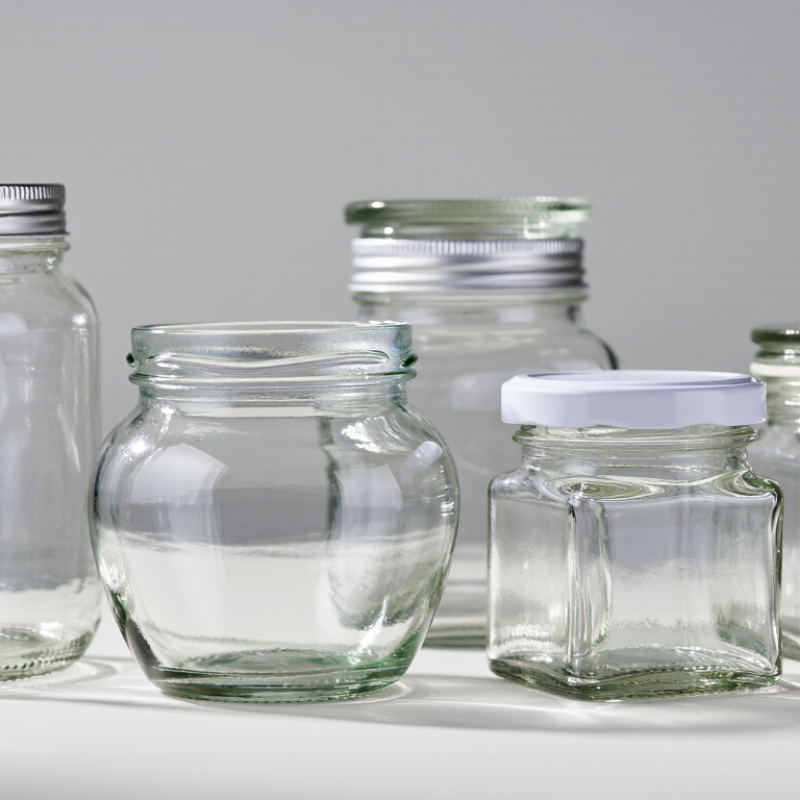
Clear glass jars are commonly grouped by shape, capacity, and closure. Straight-sided jars offer broad labels and easy access to contents. Round jars suit products displayed from several angles, while square jars can use shelf space efficiently. The categories overlap, and a neat spreadsheet cannot predict every shelf or filling line. Capacity ranges from small sample jars to larger pantry containers. Compare usable fill volume, not just the jar’s outer dimensions.
Tips: Request samples before placing a large order. Check how the jar feels when filled, whether labels sit smoothly, and whether the closure opens without slipping. A small test run can reveal issues that product drawings miss.
Closures include screw caps, lug-style lids, and cork or stopper options, depending on the jar’s finish and intended use. Match the closure to the filling process and storage needs. Confirm dimensions, material details, and pack-out protection with the supplier. For wholesale purchasing, also compare carton quantities and breakage procedures. There is no perfect type for every product; even a useful shortlist may need revising after handling samples.
Best Clear Glass Jar Types for Wholesale Buyers in 2026
Common Clear Glass Jar Types for Wholesale Purchasing
Straight-sided jars are a flexible choice for spreads, candles, and skincare products. Their broad openings make filling and scooping easier, while uniform sides simplify label placement. Wide-mouth jars offer extra access for thicker products and larger utensils. For dry goods, short, wide jars can display grains or spices clearly on a retail shelf. Hexagonal jars add visual distinction, but their corners may leave less room in tight cartons. Apothecary-style jars suit bath salts or decorative goods, though their taller profiles can require more careful packing.
Clear glass helps buyers inspect color and texture before opening. It also exposes light-sensitive contents, so product suitability matters. FEVE’s 2020 industry data reported an 80.1% glass packaging recycling rate in the EU. This is useful context for sourcing, but recycling access varies by region and collection system. Check the jar’s capacity, weight, finish, and compatible closure with a filled sample. A lid that looks right may not seal well. Small details can become expensive at scale.
Tips: Compare samples using your actual filling line and shipping carton. Ask suppliers for tolerances and pallet quantities. Leave room for breakage testing. The prettiest jar is not always the easiest one to handle.
| Jar Type | Common Capacity Range | Typical Uses | Common Closure Options | Wholesale Purchasing Considerations |
|---|---|---|---|---|
| Straight-Sided Jar | 4–32 fl oz (about 120–950 ml) | Food spreads, sauces, cosmetics, bath products, and craft supplies | Continuous-thread metal or plastic lid; some formats use lug closures | Its uniform sides provide a broad labeling area and make filling and packing straightforward. Confirm the opening diameter and lid liner are suitable for the product. |
| Mason-Style Jar | 4–64 fl oz (about 120 ml–1.9 L) | Preserves, pickles, dry goods, beverages, and home storage | Two-piece canning lid or compatible one-piece screw cap, depending on jar finish | Check whether the jar is intended for home canning or general packaging. Canning performance depends on the jar, closure, and validated processing method. |
| Wide-Mouth Jar | 8–64 fl oz (about 240 ml–1.9 L) | Nut butters, chunky foods, powders, personal-care products, and bulk storage | Wide-mouth continuous-thread lid, often with a suitable liner | The larger opening can ease filling and product removal. Compare opening size, usable capacity, and closure availability across suppliers. |
| Hexagonal Jar | 1.5–16 fl oz (about 45–475 ml) | Honey, jams, sauces, favors, and specialty food packaging | Lug cap or continuous-thread cap, depending on the finish | Distinctive panels can support shelf presentation, but the shape may require careful case-pack planning. Verify label dimensions and carton fit. |
| French Square Jar | 2–32 fl oz (about 60–950 ml) | Spices, condiments, cosmetics, laboratory supplies, and pantry products | Continuous-thread screw cap | Square sides can use shelf space efficiently and offer flat labeling surfaces. Check corner protection and shipping-pack specifications. |
| Apothecary Jar | 4–64 fl oz (about 120 ml–1.9 L) | Bath salts, cotton products, confectionery, and decorative retail displays | Glass stopper, cork, or screw cap, depending on the design | Often selected for display as well as storage. Confirm whether the closure is airtight; decorative stopper styles may not provide a moisture-tight seal. |
| Paragon Jar | 8–32 fl oz (about 240–950 ml) | Pickles, olives, sauces, relishes, and other preserved foods | Lug-style metal closure, commonly selected to match the jar finish and product requirements | The tall profile suits elongated products and can support efficient case packing. Confirm finish compatibility and food-packaging requirements with the supplier. |
| Candle Jar | 4–16 fl oz (about 120–475 ml) | Container candles and wax-based home-fragrance products | Separate lid, such as a metal, glass, or wood-style lid | Assess heat suitability and test the complete candle system, including wax, wick, fill level, and burning conditions. A jar described as glass is not automatically suitable for every candle application. |
Capacity ranges are indicative examples, not universal specifications. Available sizes, glass weights, finishes, closure compatibility, minimum order quantities, and case-pack quantities vary by supplier and product design.
Clear glass jars vary in weight, strength, and suitability for different filling conditions. Standard soda-lime glass works well for many dry goods and room-temperature products. Borosilicate glass tolerates temperature changes better, but often costs more. It is not automatically the better choice. Match the material to your filling process, product, and shipping conditions before comparing unit prices.
Wall thickness and base shape affect stability during packing and transport. A broad, even base can help jars sit securely on a conveyor or shelf. Neck dimensions matter too: small variations may cause problems with automated capping. Request samples from more than one production lot. Measure the height and mouth, inspect the rim, and check for visible seams. Clear glass also shows fingerprints, product settling, and contents exposed to light. That trade-off is easy to overlook.
Tips: Fill sample jars, apply the intended closures, and pack them as you would for shipment. Check for leaks, chipped rims, and breakage after handling. Test real conditions. I would not rely on a single perfect sample; production runs can vary, so confirm dimensions against your own tolerance requirements.
Choosing a clear glass jar starts with the product, not its shape. Straight-sided jars give labels a broad, even surface, useful for sauces, spreads, and dry goods. Their simple walls also make shelf presentation easy to assess. Wide-mouth jars suit chunky products and hand filling because spoons and scoops can reach inside. For fine powders, a narrower opening may help control pouring, though the right fit depends on the filling process.
Consider closure compatibility early. A jar’s neck finish must match its lid or cap, and a sample fit is more reliable than a catalog image. Check the fill line, too. Extra headspace can affect appearance and transport stability. For heavier contents, compare glass thickness and packed-case weight before setting wholesale quantities.
Decorative shapes, such as hexagonal jars, can stand out, but labels may be harder to apply evenly. Small detail. Ask suppliers for dimensions, closure samples, and carton specifications, then test a filled jar through packing and unpacking.
One practical lesson: the most attractive option is not always the easiest to label or ship. A short trial run can reveal awkward handling before a large order is placed.
For wholesale buyers, clear glass jars are not interchangeable, even when their capacities look similar. A 250 ml jar with narrow shoulders may hold less usable product than a straight-sided jar. Compare internal volume, mouth diameter, height, and base width against filling equipment and shelf plans. Bring a sample.
Closure fit deserves equal attention. A lid that seals on one jar may wobble on another because rim dimensions vary. Ask suppliers for technical drawings, closure specifications, and samples from a production lot, not just a showroom piece. Request documentation confirming the glass is suitable for its intended use.
Different products call for different forms: wide-mouth jars suit hand filling, while narrow-neck styles can reduce spills with pourable contents. Check glass weight as well. Thicker walls may feel more substantial, but they increase shipping costs and do not always improve performance. Ask for impact and packaging test results, then inspect cartons for dividers, corner protection, and excess movement.
Confirm lead times, minimum order quantities, and replacement terms in writing.
Small details matter.
Clear glass can reveal bubbles, scratches, or uneven color, so agree on acceptable variation before production. One caveat: polished samples rarely show every production flaw.
Run a pilot order. It adds time, sometimes inconveniently, but can reveal label-fit and packing problems before a full shipment.
