What Is the Best Wall Backsplash for 2026?
Choosing the best Wall Back Splash for 2026 is less about chasing a trend and more about finding a surface that suits your room, routine, and budget. A backsplash must handle splashes near the sink, cooking residue behind the range, and the daily wipe of a damp cloth. It should also sit comfortably beside your countertop, cabinets, and lighting. Small samples help: view them in morning light, then again under warm evening bulbs. The difference can be surprising.
Design offers a useful reminder from Charles Eames, the influential designer: “The details are not the details. They make the design.” For a backsplash, those details include grout color, edge trim, surface texture, and how the pattern ends at a cabinet. They can change the whole impression. In this guide, we’ll compare practical options such as ceramic, porcelain, natural stone, and glass, while considering maintenance, installation, and visual impact. No single material wins every kitchen. Stone can develop marks; glossy tile may show fingerprints. Those trade-offs deserve an honest look. The best choice is the one you can live with, clean, and still enjoy years from now.
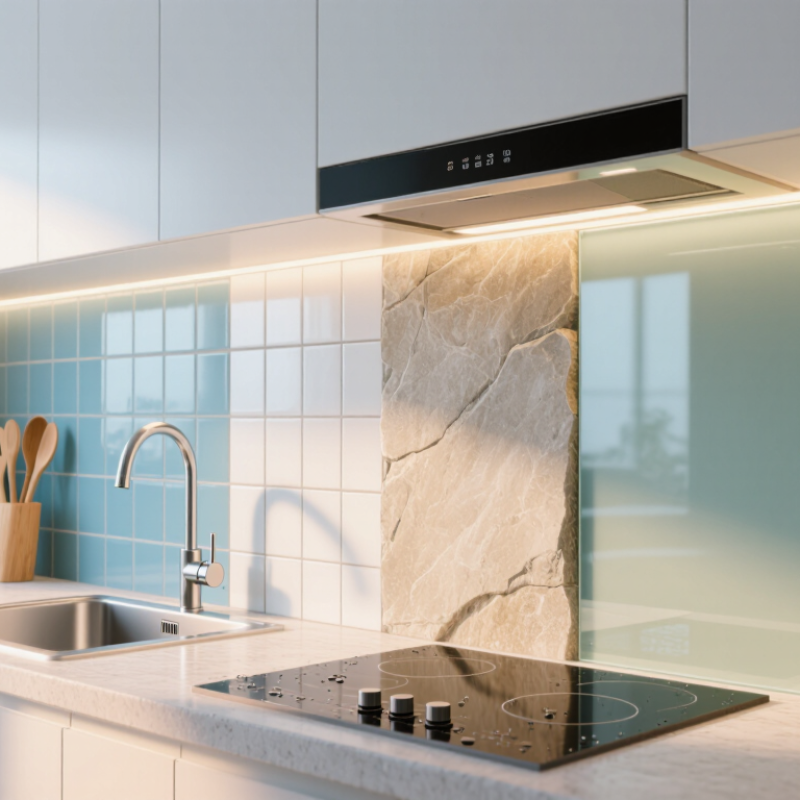
What a Wall Backsplash Does and Where It Is Used
A wall backsplash is a protective, easy-to-clean surface installed behind counters, sinks, or work areas. It catches splashes from cooking, handwashing, and everyday cleanup before they stain painted drywall. It can also hide small gaps between a counter and wall. It is useful, but it is not a substitute for sound plumbing or proper waterproofing.
In kitchens, backsplashes commonly cover the wall behind a sink or cooking surface. Some extend along the full counter for a continuous finish; others protect only the busiest spots. Bathrooms often use them behind vanities, where toothpaste and water can mark paint. Laundry rooms and utility areas benefit too, especially near deep sinks. For showers, tile alone does not make a wall waterproof. The layers behind it matter. A detail that is easy to overlook.
Tips: Choose a surface you can clean without special effort. Check how its edges meet cabinets, counters, and outlets. A glossy finish may wipe clean quickly, but it can show water spots. Before choosing a height, consider where splashes actually land in your room. The neatest-looking layout is not always the most practical one.
How to Compare Backsplash Materials for 2026
What Is the Best Wall Backsplash for 2026?
How to Compare Backsplash Materials for 2026
The best backsplash depends on cooking habits, cleaning tolerance, and wall conditions. Houzz’s 2024 U.S. Kitchen Trends Study found that 83% of renovating homeowners upgraded their backsplash; tile was the leading choice, selected by 71%. That popularity makes sense: ceramic and porcelain offer many colors and formats, while individual tiles can be replaced if chipped. Grout needs attention, though. Pale grout near a busy cooktop can show splashes quickly.
Porcelain is a practical choice for frequent cooking and regular wiping. The Tile Council of North America’s ANSI A137.1 standard defines porcelain tile by water absorption of 0.5% or less. That’s a useful specification, not a guarantee that every installation will perform equally well. Check the tile, grout, and installation details together. Small joints matter.
Glass creates a reflective surface that is easy to wipe, but glare and visible smudges may bother some households. Natural stone brings varied veining; its care requirements depend on the stone and finish, so ask the supplier about sealing and stain testing. Metal can suit a modern kitchen, yet fingerprints may become part of the routine. I’d compare real samples beside the countertop and under the kitchen’s actual lighting. Screens can make subtle colors look deceptively simple.
Which Backsplash Options Suit Different Rooms and Needs
What Is the Best Wall Backsplash for 2026?
Which Backsplash Options Suit Different Rooms and Needs
The best backsplash depends on the room, cleaning routine, and the wall behind it. In kitchens, porcelain or ceramic tile handles daily splashes and offers many sizes and finishes. Houzz’s 2024 U.S. Kitchen Trends Study found that tile was used in 71% of updated kitchen backsplashes. That preference is practical, not universal. Pale grout near a busy stove can show stains quickly.
For bathrooms, choose a surface that tolerates frequent moisture and has few hard-to-clean joints. Large-format porcelain creates fewer grout lines around a vanity or shower. A glossy surface can brighten a small room, but it may show water spots. Easy to wipe. Natural stone adds texture, though it usually needs more careful maintenance. Confirm that the material and installation suit the wet area.
Laundry rooms and mudrooms need durability more than a delicate focal point. Ceramic tile or a continuous panel can protect walls from detergent splashes, wet coats, and scuffed bags. In a rental or low-use space, keep the design simple and choose readily replaceable materials. One honest caveat: grout still needs attention, even when the tile itself is easy to maintain. Before choosing, compare samples under the room’s actual lighting and check care instructions. A beautiful sample can behave differently beside a sink.
How Design, Maintenance, and Cost Shape the Best Choice
The best wall backsplash for 2026 depends less on a single trend than on how you cook, clean, and budget. Porcelain and ceramic tiles offer many colors and sizes, and they handle everyday splashes well. Larger tiles mean fewer grout lines, which can make a compact kitchen feel calmer. Grout matters.
Glass can brighten a dim wall, but fingerprints and dried water spots may show more clearly. Natural stone brings variation and texture; it also needs care suited to its finish. Check cleaning instructions before choosing, rather than assuming every stone surface behaves the same. Looks can mislead.
Maintenance is easiest when the surface is smooth and the grout is properly sealed where needed. Near a stove, wipe oil before it hardens, especially along seams and around outlets. A small sample helps you see how light changes the color at different times of day. It is an imperfect test, though: a sample cannot show how a whole wall will feel.
Cost includes more than the tile. Installation, edge details, surface preparation, and future grout repairs can change the final bill. A simple tile may cost less upfront, while intricate patterns can require more cutting and labor. Set aside room for those details; budgets tend to miss them. I would not choose solely by price, but paying extra is not automatically better.
What Is the Best Wall Backsplash for 2026? - How Design, Maintenance, and Cost Shape the Best Choice
| Material | Design Character | Maintenance | Durability Considerations | Typical Installed Cost (US$/sq. ft.) | Best Suited For |
| Ceramic tile | Broad range of colors, shapes, and patterns; works in classic or contemporary kitchens. | Wipe tile regularly; grout may need periodic cleaning or sealing, depending on grout type. | Glazed surfaces are easy to clean, but tile can chip if struck; grout lines can stain. | $10–$30 | Budget-conscious projects and highly customizable layouts. |
| Porcelain tile | Available in varied finishes, including stone- and concrete-look designs. | Usually needs routine wiping; grout joints still require care. | Dense, low-absorption tile generally resists moisture and wear well; cutting and installation can be more demanding. | $15–$40 | A durable, low-maintenance choice with many appearance options. |
| Glass tile | Reflective surface can brighten a room; color and finish vary from subtle to bold. | Nonporous glass is straightforward to wipe, though smudges and water marks can show. | Resists moisture and staining, but may chip or scratch; installation requires suitable setting materials and careful workmanship. | $20–$50 | Light-enhancing accents and kitchens where a polished look is desired. |
| Natural stone tile | Each piece has natural variation in color and veining for an organic, distinctive look. | Use stone-safe cleaners; many stone types need periodic sealing, based on the material and use. | Porous stones can absorb oils or stain if not protected; some are sensitive to acidic cleaners. | $20–$60 | A natural, one-of-a-kind finish for owners comfortable with extra care. |
| Solid-surface or quartz panels | Large, continuous panels create a streamlined appearance with few or no visible grout joints. | Typically cleaned with a soft cloth and mild cleaner; follow the surface maker’s care instructions. | Fewer seams can simplify cleaning; heat tolerance and repair options vary by product and composition. | $40–$100 | A grout-minimizing look, especially when coordinated with a countertop. |
| Stainless steel | Clean, reflective, and distinctly modern; often used behind cooking areas or across a full wall. | Wipe with a soft cloth; fingerprints and water marks may be visible, and abrasive cleaners can scratch. | Moisture-resistant and nonporous, but the surface can dent or show scratches depending on its gauge and finish. | $20–$50 | Contemporary kitchens and surfaces that are easy to wipe down. |
Cost guide: Broad illustrative US installed-price ranges per square foot, including typical materials and labor. Actual estimates vary with location, material grade, tile size, surface preparation, layout complexity, edge details, and project minimums. Grout, trim, demolition, and unusual installation requirements may add cost. Confirm current local quotes before budgeting.
What to Check Before Installing a Wall Backsplash
What Is the Best Wall Backsplash for 2026?
What to Check Before Installing a Wall Backsplash
The best backsplash depends on the wall, the room, and how you cook or clean. Before choosing tile, glass, stone, or another surface, check whether the wall is flat, dry, and structurally sound. Repair loose plaster and address moisture first; a beautiful finish will not fix a damp wall. Measure the area, including corners and the space behind appliances. Small errors can leave awkward slivers near cabinets. Check outlet locations, too, since thicker materials may need longer electrical boxes or adjustments by a qualified professional.
Tips: Bring home a sample and view it in morning and evening light. Wipe it with the cleaner you expect to use. Check the product’s installation instructions for suitable surfaces, grout, sealant, and heat exposure.
Think about upkeep before appearance alone. Textured finishes and pale grout can show cooking splashes, while very glossy surfaces may highlight fingerprints. Near a cooktop, follow the appliance and backsplash manufacturers’ clearance guidance; requirements vary. Ask your installer how the material handles cuts around outlets and how edges will be finished. This can feel overly cautious, but those details affect the final look. I would not assume every wall is ready just because it looks smooth. A small test area may reveal unevenness or adhesion problems before the full installation begins.
What Is the Best Wall Backsplash for 2026?
There’s no single best backsplash tile for every wall. Compare tile size and layout against your wall dimensions, outlets, exposure to moisture or heat, and cleaning needs before choosing a material.
Example tile-format face area is calculated from nominal tile dimensions. Larger tiles may mean fewer grout joints, but actual product dimensions and installation requirements vary. Check the manufacturer’s specifications and plan cuts around outlets and edges before installing.