

Choosing the right candle vessel can shape how customers remember your brand. Unique Candle Jars do more than hold wax. They create a visual promise before the wick is lit. A smoky amber jar can suggest warmth and heritage. A clear, thick-walled vessel can communicate clean design and everyday luxury. However, appearance should never replace performance. From product development experience, jar diameter, glass thickness, lid fit, and heat resistance directly affect safety and customer satisfaction.
Begin by matching the jar to your fragrance collection and target buyer. Test how the label sits under natural light, how the lid sounds when removed, and how the vessel feels in one hand. Check whether the opening supports an even melt pool without excessive heat. Request supplier documentation, including material specifications, temperature testing, and quality-control procedures. Always conduct burn tests with your actual wax, fragrance load, wick, and label materials. Small differences matter.
Details matter most.
A distinctive shape may photograph beautifully but stack poorly during shipping. A delicate finish may attract attention but show fingerprints quickly. I have seen attractive packaging lose its appeal because the lid loosened in transit. That mistake is easy to miss during a showroom review. Consider packaging protection, refill or reuse options, and regional labeling requirements before placing a large order. Reliable suppliers should communicate clearly, provide samples, and explain production limits. Your first choice may not be perfect. That is useful. Careful testing can turn an attractive idea into Unique Candle Jars that feel credible, functional, and memorable.
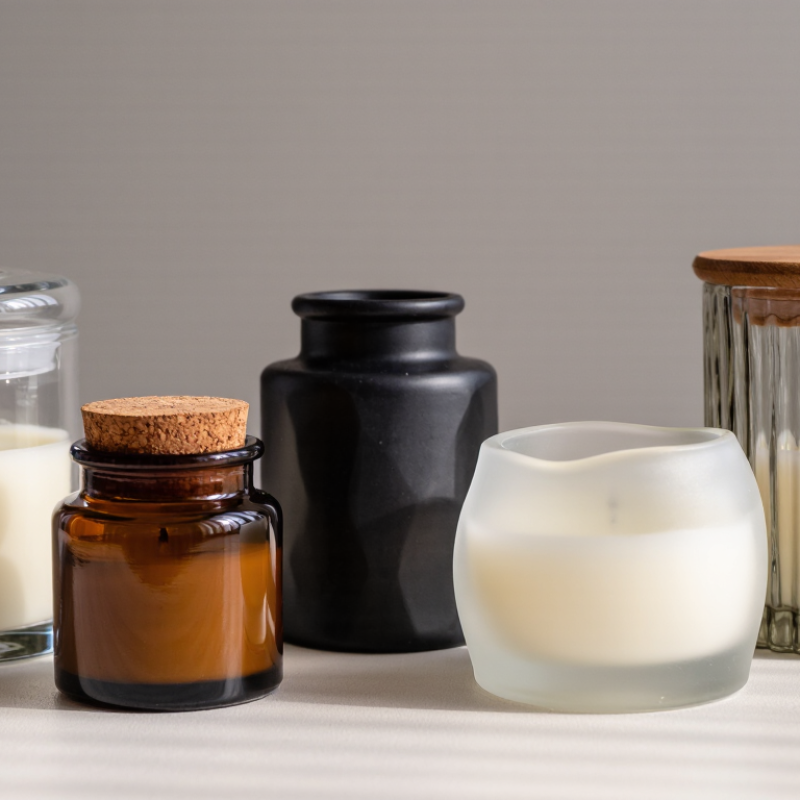
Before choosing a unique candle jar, define what your brand actually needs. Start with the candle’s fill weight, wax type, wick size, and expected burn time. A wide jar can support a larger melt pool, while a narrow jar may improve the visual height of the flame. Measure the inner diameter carefully. Small changes affect performance.
Think about the customer’s daily experience. Will the jar feel comfortable in one hand? Can the label sit flat without wrinkling? Does the lid protect the candle from dust and fragrance loss? Clear glass highlights color, but amber or frosted glass creates a softer mood. Ceramic offers texture, though its weight can increase shipping costs. Choose heat-resistant materials and request samples before placing a production order. Test several burns in a controlled area. Check the jar temperature, flame stability, soot, and leftover wax.
Your requirement sheet should also include dimensions, color tolerance, surface finish, closure type, packaging needs, and acceptable defect levels. Ask for test reports and material details from the supplier. Local safety requirements may vary, so confirm them before selling. Do not rely on attractive photos alone. They can hide uneven rims or weak lids. I once underestimated how much a heavy vessel changed the customer’s shipping cost. That detail deserved earlier attention. Leave room for revision. A distinctive jar is useful only when it performs reliably, fits your budget, and feels consistent with the product inside.
How to Choose Unique Candle Jars for Your Brand?
A candle jar should attract attention before the wick is lit. Grand View Research valued the global candle market at USD 12.88 billion in 2023. It also forecasts a 5.7% annual growth rate from 2024 to 2030. This growth makes familiar jar shapes less memorable. A low, wide vessel feels modern and stable on a coffee table. A tall cylinder creates a stronger vertical presence. A soft square shape offers more label space, but sharp corners may feel less comfortable in the hand. Test the grip. Small details matter.
Material changes both perception and performance. Clear glass shows wax color and embedded texture, while amber glass gives a warmer, more traditional appearance. Ceramic provides a heavier, handcrafted feeling, though glaze consistency can vary between production batches. McKinsey’s 2020 global packaging survey found that 60–70% of consumers were willing to pay more for sustainable packaging, depending on the category. Consider recycled glass, removable labels, and easily separated lids. However, sustainability claims need evidence. Vague wording can weaken trust. Distinctive features might include a tactile lid, a colored base, a debossed pattern, or a double-wall silhouette. Avoid decoration that interferes with heat release. Test thermal shock, burn behavior, lid fit, and surface temperature against recognized candle-safety practices, including ASTM F2417. A beautiful jar can still fail in use. That is an uncomfortable, necessary lesson.
| Jar Option | Shape and Typical Capacity | Material | Distinctive Design Features | Visual Impression | Practical Considerations | Suitable Brand Positioning |
|---|---|---|---|---|---|---|
| Straight-Sided Tumbler | Cylindrical or gently tapered profile 120–300 ml | Clear, frosted, or colored soda-lime glass | Clean vertical walls, broad label area, matching lid, and simple rim finish | Modern, versatile, and easy to coordinate across multiple fragrances | Provides a stable base and usually allows efficient packing; the flat exterior is suitable for labels, screen printing, or direct decoration | Everyday premium, minimalist, lifestyle, and gift collections |
| Apothecary Jar | Rounded body with a narrower neck or shoulder 180–450 ml | Clear or amber glass | Raised shoulders, vintage-style lid, embossed details, or an oversized closure | Heritage-inspired, nostalgic, and craft-oriented | The curved shoulder can reduce label space; the jar silhouette may require a fitted protective insert for shipping | Botanical, heritage, artisanal, and home-fragrance ranges |
| Low Bowl Vessel | Wide, low-profile round or oval form 180–350 ml | Glass or glazed ceramic | Wide opening, shallow proportions, exposed wax surface, and optional footed base | Decorative, luxurious, and visually bold | The wider melt pool can create strong shelf presence, but the vessel needs adequate clearance from nearby objects during use | Statement pieces, luxury interiors, and seasonal collections |
| Square or Rectangular Vessel | Geometric body with straight corners 150–300 ml | Thick glass, ceramic, or porcelain | Flat panels, sharp edges, inset lid, contrasting corners, or wraparound artwork | Architectural, contemporary, and design-led | Flat faces are suitable for structured graphics; corners should be checked for comfortable handling and even heat distribution | Modern interiors, design-conscious collections, and unisex ranges |
| Colored Glass Jar | Usually cylindrical, oval, or faceted 120–300 ml | Opaque, translucent, or transparent colored soda-lime glass | Single-color body, gradient tint, satin finish, or contrasting metallic lid | Recognizable, collectible, and visually consistent on a shelf | Color can hide wax appearance and minor residue; confirm that the glass is intended for candle use and withstands repeated heating | Color-coded fragrance families, seasonal launches, and coordinated collections |
| Amber Glass Jar | Straight-sided or gently rounded profile 120–300 ml | Amber-tinted glass | Warm brown tone, black or natural lid, and pharmacy-inspired label treatment | Natural, apothecary-inspired, and grounded | Amber glass reduces visible light transmission compared with clear glass; it still requires correct wick selection and safe-use testing | Wellness, botanical, essential-oil-inspired, and rustic collections |
| Ceramic Vessel | Cylindrical, rounded, sculptural, or irregular 150–500 ml | Glazed or unglazed ceramic | Hand-finished glaze, speckled surface, relief texture, matte exterior, or sculptural silhouette | Tactile, handcrafted, and highly decorative | Surface variation can make every piece distinctive; the vessel should be tested for cracks, glaze integrity, thermal performance, and suitable interior dimensions | Artisanal, premium, handmade, and interior décor collections |
| Concrete or Mineral Vessel | Heavy cylindrical, square, or geometric form 180–450 ml | Concrete, jesmonite, or other mineral-based composite | Natural pores, terrazzo chips, color variation, raw texture, and contrasting inlays | Industrial, earthy, and architectural | Often heavier than glass and may absorb oils if not properly sealed; use a tested inner barrier and protect the surface from moisture and staining | Design studios, sustainable-minded concepts, and contemporary interiors |
| Faceted Glass Jar | Polygonal body, commonly with 6–12 visible sides 150–300 ml | Clear, tinted, or frosted glass | Cut-like facets, reflective edges, thick base, and decorative lid | Elegant, luminous, and giftable | Facets create highlights under retail lighting; inspect edges and corners carefully for chipping during filling, packing, and transport | Fine fragrance, celebration, gifting, and premium seasonal lines |
| Travel Tin | Lightweight cylindrical metal container 80–220 ml | Tinplate or aluminum with a protective interior coating | Slip lid, pull-tab lid, printed exterior, and compact proportions | Portable, casual, and practical | Lightweight and stackable; the inner coating must be compatible with the wax, fragrance, and intended burn temperature | Travel, outdoor use, introductory sizes, and value-oriented collections |
| Refillable Insert Vessel | Durable outer vessel with removable inner cup 180–350 ml | Glass, ceramic, metal, or stone exterior with a replaceable inner container | Interchangeable inserts, reusable outer shell, magnetic lid, or modular accessories | Functional, considered, and long-term oriented | Requires precise dimensional matching between the vessel and insert; refill instructions and cleaning guidance should be clear to the user | Refill programs, premium home goods, and durability-focused collections |
Capacity ranges are typical planning references rather than universal specifications. Before production, verify vessel dimensions, wax fill weight, wick compatibility, heat resistance, coating performance, lid fit, and applicable candle-safety requirements with the supplier.
Choosing a unique candle jar starts with the wax, not the shape. Soy wax often needs a wider melt pool and may suit a moderate-width vessel. Beeswax burns hotter and can expose weak glass to greater thermal stress. A narrow jar may produce tunneling when paired with a slow-burning wax. Appearance comes later.
Fragrance concentration also changes performance. Heavy fragrance oils can soften some waxes and alter wick behavior. Test the scent after curing, not immediately after pouring. Check cold throw, hot throw, soot, flame height, and melt-pool depth. A clear jar reveals frosting and wet spots, while an opaque jar hides them. That can help presentation, but it may also hide defects.
I once preferred a dramatic, thin-walled vessel because it looked refined in photographs. The first burn test showed uneven heating near the base. That choice needed reconsideration. Now, I compare at least three jar shapes with the same wax, fragrance load, wick, and fill level. Record results at each burn interval. Leave enough headspace for safe handling and observe the vessel after cooling. A jar should feel distinctive, yet remain stable throughout its intended use. Test more than once.
How to Choose Unique Candle Jars for Your Brand?
A distinctive jar begins with a dependable supplier, not a striking sketch. Grand View Research valued the global candle market at USD 12.88 billion in 2022, with projected growth through 2030. That expansion increases supplier choice, but also creates quality risks. Request factory photos, material specifications, sample records, and recent test results. Ask about glass thermal-shock testing, lead times, minimum order quantities, and rejection policies. A low unit price can hide expensive defects.
Customization should support production, not merely decoration. Compare clear, amber, ceramic, and recycled-glass options by wall thickness, lid fit, wax compatibility, and shipping weight. Confirm whether color is molded, sprayed, or applied through coating. Each method changes durability and cost. Calculate the full landed cost: jar, lid, tooling, decoration, packaging, freight, inspection, and defective units. Custom molds may require a large deposit. Small batches often carry higher decoration costs. This is where early estimates can be wrong.
Tips: Order samples from at least three suppliers. Burn-test each jar with your intended wax and wick. Measure surface temperature and soot after repeated use. Ask for a written quote with tooling ownership clearly stated. Leave room for 5–10% production loss, even after approval. I have found that attractive prototypes sometimes fail during packing. That is an uncomfortable lesson. Evaluate the supplier’s communication, corrective-action speed, and documentation, not only the jar’s appearance. Cite market assumptions by date, because industry forecasts change.
Supplier reliability, customization flexibility, and production cost are the key factors when evaluating candle jar options. The benchmark scores below use a 10-point procurement scale, where higher scores indicate a stronger advantage.
Key insight: Standard glass jars usually provide the lowest production cost, while custom colors, embossed logos, and complex shapes offer stronger differentiation but require higher minimum order quantities and longer lead times.
How to Choose Unique Candle Jars for Your Brand?
A distinctive jar should look memorable, but appearance cannot replace performance. Grand View Research estimated the global candle market at approximately USD 12.9 billion in 2023, with continued growth expected. That growth increases competition, making practical differentiation important. Test several jar shapes, colors, wall thicknesses, and closure styles before making a purchasing decision. Compare identical wax, fragrance load, wick type, and fill weight. Otherwise, the jar may receive credit for a formula change.
Keep a simple testing sheet. Record melt-pool width, burn time, soot, scent release, surface temperature, and leftover wax. Test narrow, wide, tall, and unusually shaped vessels under controlled conditions. Watch the flame closely. ASTM F2417 provides guidance for candle fire safety, while ASTM F2058 addresses candle fire-safety labeling. These standards should inform your process, not replace professional evaluation. A visually impressive jar can still feel awkward in the hand or waste fragrance through poor heat distribution.
Small details matter. A heavy base feels stable on a bathroom shelf. A smooth rim improves pouring and handling. A lid can protect the wax, but it may add shipping weight and cost. My early preference was an irregular silhouette; later testing showed that it reduced label visibility. That was disappointing, but useful. Compare prototype costs, breakage rates, supplier consistency, and customer handling feedback. Select the jar that performs reliably, photographs clearly, and still feels distinctive after repeated use.
