

Choosing Ordinary Plywood for a global project requires more than comparing prices and thicknesses. The right panel must suit the building’s climate, structural demands, handling conditions, and final application. A 12-millimeter sheet may perform well inside a dry office, yet fail quickly in a humid warehouse or exposed construction area. Small details matter. Core gaps matter. Moisture matters.
Experienced buyers usually begin with the project specification, not the supplier’s product name. They confirm veneer species, panel grade, dimensions, density, bonding quality, and allowable tolerances. They also check formaldehyde emissions, moisture resistance, and relevant regional standards. Requirements may differ between Europe, North America, Asia, and emerging markets. Local building codes should guide the final decision. A supplier’s test report is useful, but independent laboratory verification offers stronger confidence. Clear batch numbers and production records make quality easier to trace.
No checklist is perfect. A panel can pass a laboratory test and still suffer from poor storage during ocean transport. I have seen otherwise acceptable plywood arrive with swollen edges after exposure to rain. That risk deserves attention. Buyers should request samples, inspect the cut core, review packaging, and discuss claims procedures before placing large orders. Ordinary Plywood is not automatically a low-quality choice. Its value depends on consistent manufacturing, honest documentation, and correct application. This guide examines those practical factors, helping project teams balance cost, performance, compliance, and supply reliability across international markets.
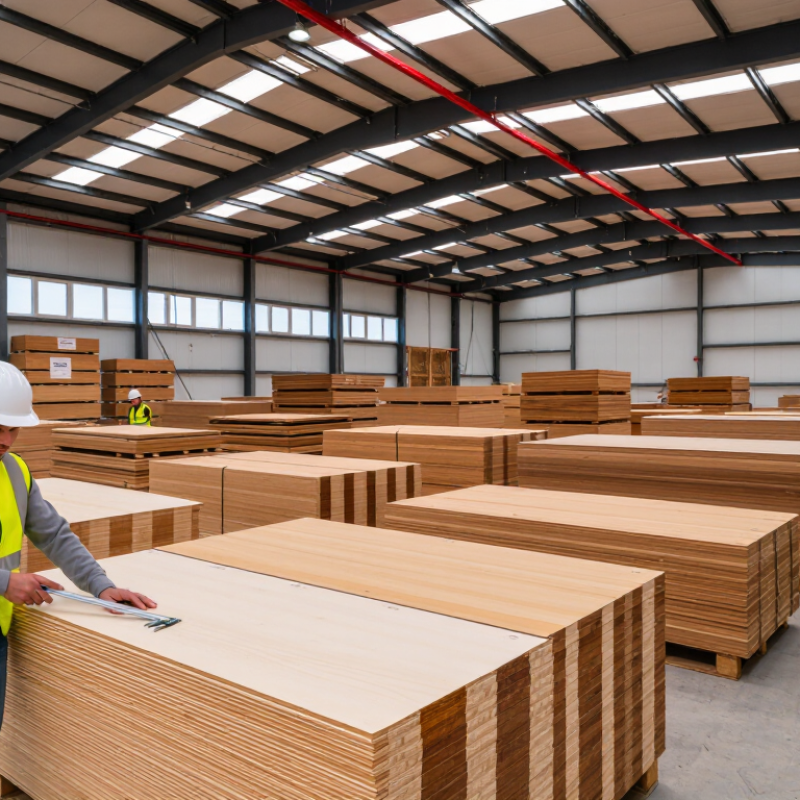
Ordinary plywood is a practical engineered panel made from thin wood veneers. Its cross-layer structure offers useful strength and dimensional stability. It suits furniture backs, interior partitions, packaging, wall linings, and temporary site structures.
For global projects, application matters more than a low purchase price. A dry indoor panel may fail quickly in humid storage. Check thickness, veneer quality, core gaps, surface flatness, and bonding performance before ordering. A 12-millimeter sheet can look suitable, yet uneven layers may cause weak screw holding.
Tips
Request recent technical data and a physical sample. Measure the sample after delivery. Inspect edges for open joints, delamination, or excessive voids. Confirm moisture resistance for the intended environment, not merely the shipping route. Ask about formaldehyde emissions and testing methods when panels enter occupied buildings. Requirements differ between countries and project types, so independent verification is sensible. Do not rely on a translated product description alone.
In practice, ordinary plywood performs well when protected from standing water and direct weather exposure. Store sheets flat on bearers, above the floor, with air movement around the stack. Cover them, but do not seal in condensation.
I have seen attractive surfaces hide rough inner veneers; that mistake becomes expensive during installation. For export projects, calculate container loading, edge protection, and replacement tolerance early. A small size variation can disrupt a repetitive wall system. The material is simple, but the decisions are not.
Choosing ordinary plywood for global projects starts with understanding its grade, not its appearance. Grade labels vary between suppliers and markets. Request the applicable standard, test reports, and production date before approval. A stamped grade alone is not enough. Check whether the panel suits structural, furniture, packaging, or interior use. These applications need different strength and appearance levels.
Core material affects stability, weight, and machining. Poplar, eucalyptus, birch, and mixed hardwood cores behave differently under humidity changes. Examine the panel edges for large voids, overlapping veneers, or loose repairs. Small gaps may accept screws poorly and create weak points during cutting. A moisture meter helps, but readings should be taken from several sheets. One measurement can mislead.
Surface quality needs close inspection under angled light. Look for open knots, bubbles, sanding marks, patches, and uneven thickness. A smooth face may hide a rough inner layer. Ask for sample panels and test them with your actual coating, adhesive, or cutting process. I have seen attractive sheets warp after storage because ventilation was poor. That experience changed my checks: I now inspect packaging, stacking, and warehouse humidity, not just the plywood itself. Perfect uniformity is rarely realistic, so define acceptable defects in writing before shipment.
| Evaluation Dimension | Common Option or Grade | Technical Meaning | Typical Project Suitability | What to Verify Before Purchase |
|---|---|---|---|---|
| Intended service environment | Dry interior use | The panel is designed for conditions where moisture exposure is limited and stable. | Furniture components, wall panels, partitions, packaging, and interior fit-out. | Confirm the applicable product standard, moisture limits, thickness tolerance, and storage requirements. |
| Bonding performance | EN 314-2 Class 1 | Bonding intended for dry conditions; it is not a guarantee of weather resistance. | Indoor applications with controlled humidity and no prolonged wetting. | Request test reports or declarations showing the bonding class and test method. |
| Bonding performance | EN 314-2 Class 2 | Bonding suitable for limited exposure to moisture, such as occasional damp conditions. | Kitchens, bathrooms with proper protection, interior construction, and sheltered applications. | Check whether the intended project requires a higher durability class or additional sealing. |
| Bonding performance | EN 314-2 Class 3 | Bonding suitable for exterior conditions and repeated wetting, subject to the full panel specification. | Exterior cladding substrates, outdoor construction, transport structures, and humid environments. | Verify the full durability specification, face veneer quality, edge sealing, and required coating system. |
| Use class under EN 636 | EN 636-1 | Plywood for dry conditions. | Interior building work and general dry-use fabrication. | Do not substitute it for a moisture-resistant or exterior grade without project approval. |
| Use class under EN 636 | EN 636-2 | Plywood for humid conditions. | Covered exterior areas and interior locations with elevated humidity. | Check exposure duration, edge protection, surface coating, and local building requirements. |
| Use class under EN 636 | EN 636-3 | Plywood for exterior conditions. | Outdoor applications where the panel is exposed to weather, when correctly designed and protected. | Confirm structural design, preservative treatment where needed, coating compatibility, and maintenance requirements. |
| Core material | Poplar core | Usually lightweight and easy to machine, with lower density than many hardwood alternatives. | Lightweight furniture, interior panels, doors, and applications where low panel weight is important. | Check density, screw-holding performance, veneer gaps, core joint quality, and moisture resistance. |
| Core material | Eucalyptus or other hardwood core | Generally denser and harder than lightweight species, with good durability potential when properly manufactured. | Construction panels, shelving, flooring substrates, transport components, and higher-wear applications. | Confirm density consistency, pressing quality, formaldehyde classification, and dimensional stability. |
| Core material | Birch or other fine-grained hardwood core | Typically dense, uniform, and suitable for machining and edge finishing. | Precision furniture, visible edges, machining-intensive components, and demanding interior fabrication. | Inspect edge voids, number of plies, thickness tolerance, and surface sanding quality. |
| Core material | Mixed hardwood or softwood core | Performance can vary widely according to species mix, veneer arrangement, density, and manufacturing control. | General-purpose panels where the specification and price balance are more important than a uniform exposed edge. | Request species information, average density, visual samples, and test data instead of relying only on the term “hardwood.” |
| Surface quality | A-grade or face-grade veneer | Cleaner appearance with fewer repaired defects, knots, open splits, and patches than lower visual grades. | Visible furniture surfaces, painted panels, decorative interiors, and clear-finished components. | Define allowable knots, patches, discoloration, sanding marks, and color variation in the purchase specification. |
| Surface quality | B-grade face | Good appearance with limited natural defects and generally more repairs than a premium face grade. | Painted furniture, interior joinery, wall panels, and surfaces that will receive finishing. | Inspect the actual sample because grade definitions differ by standard, species, and supplier specification. |
| Surface quality | C or utility face | More visible knots, open defects, patches, color variation, and local surface imperfections are permitted. | Structural or semi-concealed components, packaging, subfloor layers, and non-decorative construction work. | Confirm whether open defects require filling and whether the panel will be covered or directly exposed. |
| Surface combination | BB/CC or similar commercial notation | The first letter generally describes the better face and the second letter the back face; exact defect limits depend on the governing standard. | Projects requiring a presentable front face while the reverse side is concealed or less critical. | Always identify the grading standard and written defect limits; letter pairs are not globally interchangeable. |
| Panel construction | Balanced odd-numbered veneer lay-up | Cross-oriented veneer layers help improve dimensional stability and reduce directional movement. | General panels, furniture, cabinetry, partitions, and construction components. | Check veneer orientation, ply count, core alignment, face balance, and thickness uniformity. |
| Dimensional quality | Standard thickness and flatness control | Thickness variation, warping, twist, and edge squareness affect installation, machining, and joint accuracy. | All projects, especially CNC machining, modular construction, flooring, and laminated assemblies. | Measure samples with calibrated tools and agree on tolerances, panel size, flatness, and moisture content. |
| Health and compliance | Formaldehyde emission classification | Emission requirements vary by destination market and may be defined by standards such as E1 or other local regulations. | Interior projects, schools, offices, residential buildings, and enclosed transport spaces. | Request a valid test report for the destination country and confirm the test method and production date. |
Matching panel specifications to climate and project requirements starts with the jobsite, not the catalog. A dry inland warehouse needs different protection than a coastal site with salty air and frequent rain. Check the expected humidity, temperature range, ventilation, and storage conditions. Ordinary plywood may perform well indoors, but exposed edges can absorb water quickly.
Panel thickness should match span, load, and fixing distance. A thin sheet may bend between widely spaced supports. A thicker sheet can add unnecessary weight and cost. Review veneer quality, surface defects, bonding performance, and dimensional stability. For damp locations, request documented moisture-resistance data instead of trusting labels alone. Local construction requirements may also limit emissions, structural grades, or fire performance.
Small details matter. Keep panels flat on raised supports, covered from direct rain, and separated from wet ground. Leave suitable movement gaps where temperature and humidity change sharply. One common mistake is choosing panels for the destination climate but storing them in an unprotected port area. Another is assuming every “ordinary” panel has the same core strength. It does not. Compare test reports, production tolerances, and independent inspection records when available. Recheck the specification after transport, because real conditions often differ from the original plan.
Evaluating certifications begins with the destination market, not the supplier’s brochure. Check whether the plywood meets recognized standards for structural performance, emissions, and responsible timber sourcing. EN 13986 may support construction use in European projects, while other regions may require different testing or documentation. A sourcing certificate verifies forest practices. It does not prove panel strength.
Durability depends on more than thickness. Inspect veneer quality, core gaps, glue-line consistency, and panel density. Ask for test reports covering bending strength, moisture resistance, and formaldehyde emissions. For humid warehouses or coastal sites, exterior-grade adhesive is essential. Store panels on level supports, away from standing water. Small handling mistakes can cause swelling before installation.
I once reviewed panels that passed factory tests but arrived with damaged edges and uneven moisture content. The paperwork looked convincing. The site results were less impressive. This is why batch inspection, sealed packaging, and independent verification matter. Compare production dates, test methods, and report numbers carefully. Some documents are valid, but outdated. Others describe a similar product, not the shipment received. International standards improve consistency, yet local climate, transport conditions, and workmanship still influence performance. A practical specification should leave room for those uncertainties.
How to Choose Ordinary Plywood for Global Projects?
Choosing ordinary plywood for a global project requires more than comparing the lowest quotation. I have seen cheap panels become expensive after moisture damage, uneven thickness, and delayed replacement. Ask each supplier for species, glue class, thickness tolerance, moisture range, and inspection records. A reliable supplier answers clearly. Request recent production photos and a small sample before approving a full order. Check whether the sample matches the quoted core structure.
Cost should include more than the board price. Calculate cutting loss, inland transport, export packing, insurance, port charges, duties, and storage. A low unit price may hide fragile edges or inconsistent pallet sizes. Compare quotations using the same delivery term and currency. Payment schedules also matter. I prefer staged payments linked to inspection and shipping documents, although this can slow negotiations. That inconvenience is sometimes useful.
Packaging must suit the route, not just the warehouse. Use level pallets, corner protection, waterproof wrapping, and visible batch labels. For humid or long sea routes, add ventilation planning and moisture indicators when appropriate. Keep bundles within safe lifting limits. Shipping conditions deserve written confirmation. Record loading photos, container numbers, seal numbers, estimated transit time, and damage procedures. One detail is often missed: the destination warehouse may lack dry, covered space. I once underestimated this risk. It caused avoidable rehandling.
Indicative export cost comparison by supplier channel for ordinary plywood, shown in USD per cubic metre.
Mill-direct purchasing generally offers the lowest material cost, while regional exporters and trading channels may add value through inspection, consolidation, documentation, and logistics coordination. Packaging and shipping costs vary with panel thickness, container utilization, destination, season, and Incoterms. Use these figures as planning benchmarks and request a current quotation before placing an order.
Benchmark basis: ordinary commercial plywood, export-grade packing, full-container shipment, typical 2025 planning ranges; values are indicative and exclude taxes, duties, insurance, and destination port charges.
