

Choosing the best Grain Semi Trailer in 2026 starts with the work it must do, not the biggest capacity listed in a brochure. Grain type, typical load size, road conditions, and unloading facilities all shape the right choice. A trailer that performs well on smooth highways may feel less suitable on uneven farm tracks or tight delivery sites.
“Match the trailer to the crop, route, and unloading point before comparing headline capacity,” says Ethan Cole, a grain-haulage specialist. Use that as a buying principle, not a substitute for checking verified specifications. Compare payload and tare weight, body volume, axle configuration, braking systems, and compatibility with your tractor unit. Then examine practical details: gate operation, seals, corrosion protection, ladder access, and how easily the body can be cleaned. Small features matter. A stubborn outlet gate can slow a busy loading day.
Ask suppliers for specification sheets, maintenance guidance, warranty terms, and references for similar operating conditions. Where possible, inspect a comparable trailer in person. Look closely at welds, hinges, tyres, and the discharge area. Even experienced buyers can focus too heavily on capacity and overlook service access or route suitability. That is an easy mistake. The “best” model is not universal, and published figures may not reflect your actual load or working environment. This guide will help you weigh those trade-offs and choose with clearer evidence.
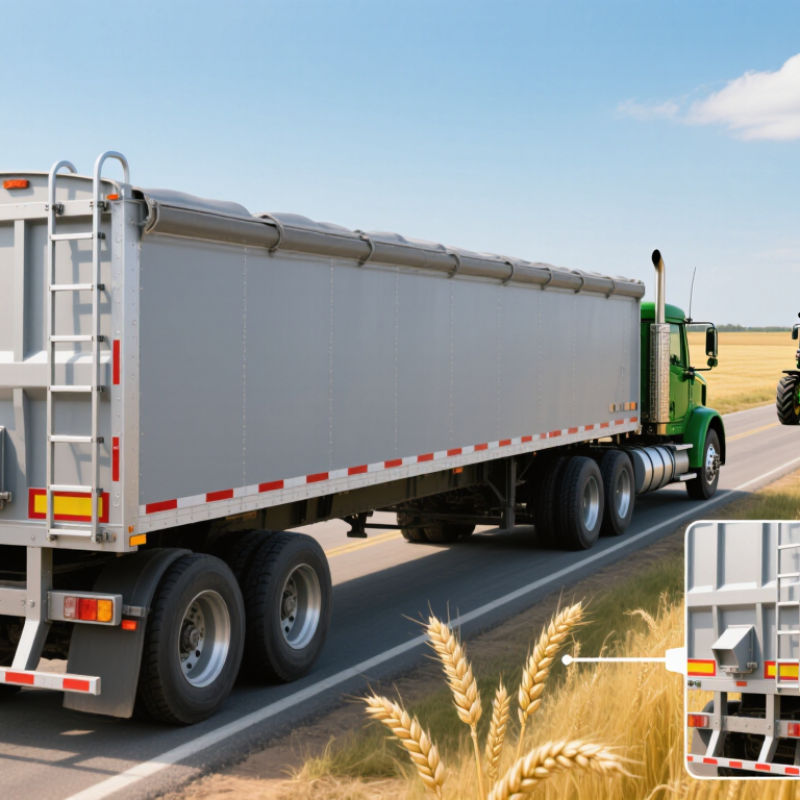
Choosing the best grain semi trailer in 2026 starts with your actual hauling work, not the largest capacity on a specification sheet. List the grain types you carry, your typical load size, and how often you unload. Corn, wheat, and smaller seeds can behave differently during discharge. Note whether you use a grain auger, pit, or other unloading setup. A trailer that fits one facility may waste time at another.
Tips: Record your usual route, loading method, and unloading time for a week. Include rough access roads, tight turns, and low-clearance areas. Small details matter.
Operating conditions shape the right configuration. Long highway runs may make tare weight and aerodynamic features worth comparing, while frequent farm access can put more emphasis on clearance, suspension, and durable components. Wet weather and dust also deserve attention: inspect seals, doors, and tarp operation, rather than assuming they will stay trouble-free. Check that your target payload suits the trailer and your truck, and verify relevant local weight requirements before purchase. A spreadsheet helps, but it can miss the muddy approach or awkward unloading angle you meet every Monday. Build in time to inspect real examples and discuss maintenance with experienced operators. The choice may still involve trade-offs. That is normal.
| Planning Factor | Typical Operating Condition | What to Assess | Trailer Selection Direction |
|---|---|---|---|
| Grain type and bulk density | Approximate bulk-density references: wheat 0.75–0.80 t/m³; corn 0.72–0.76 t/m³; soybeans 0.72–0.78 t/m³; barley 0.60–0.68 t/m³. | Identify the crops hauled most often and their seasonal variation. Actual density depends on factors such as moisture, variety, and grain condition. | Compare body volume with the legal payload. Lower-density grain may fill the trailer before reaching its weight limit; denser grain may reach the weight limit first. |
| Annual volume and trip frequency | Occasional harvest-season work, regular farm-to-elevator trips, or high-frequency commercial hauling. | Estimate annual tonnes, peak-season daily trips, loading time, and the availability of tractors and drivers. | Choose capacity and equipment around peak demand and expected utilization, not only the annual average. Consider service access and parts availability for intensive use. |
| Required body volume | A 50 m³ body would hold about 30–40 tonnes at the illustrative density ranges above if filled completely. | Calculate estimated grain mass as body volume × bulk density, then compare it with the permitted combination and axle-group limits. | Size volume to the lighter crops and weight capacity to the heaviest loads. A large body does not automatically permit a larger legal payload. |
| Legal payload and axle limits | Requirements vary by country, state or province, axle spacing, vehicle configuration, and road classification. | Confirm gross combination weight, axle-group limits, trailer dimensions, and any seasonal or route-specific restrictions with the relevant authority. | Select axle configuration and trailer specifications for the routes where the unit will operate. Obtain a loaded-weight calculation before purchase. |
| Road and field access | Paved highways, rural gravel roads, farm lanes, soft field entrances, or a mix of surfaces. | Check turning space, road width, shoulder strength, ground clearance, gradients, and access to loading and unloading sites. | For mixed or rough access, prioritize suitable ground clearance, durable running gear, and dimensions that fit the route. Confirm turning requirements with the tractor and trailer combination. |
| Loading equipment and site layout | Loading by auger, conveyor, overhead bin, or other site equipment; limited or generous clearance above the trailer. | Verify loading height, hatch access, fill distribution, and whether the site can load all compartments safely. | Match hatch location and opening dimensions to the loading equipment. Confirm overall height and loading clearance at every regular site. |
| Unloading method and turnaround time | Gravity discharge at a pit, unloading into a receiving hopper, or discharge where pit access is limited. | Check pit dimensions, ground slope, discharge opening requirements, receiving capacity, and cleaning expectations between loads. | Match hopper layout, gates, and discharge openings to the receiving facility. Verify that the site can accept the trailer’s configuration before ordering. |
| Moisture, weather, and corrosion exposure | Dry grain in sheltered conditions, frequent rain exposure, damp harvest conditions, or regular washing. | Consider water ingress risk, residue buildup, cleaning frequency, and the condition of floors, seams, and discharge areas. | Prioritize effective hatch and seal design, cleanable surfaces, and a maintenance plan suited to the exposure. Keep grain dry and follow safe storage and transport practices. |
| Distance and operating cycle | Short farm-to-elevator runs, longer regional routes, or long-haul trips with multiple loading and unloading points. | Estimate travel distance, road speed, daily cycles, waiting time, and whether the trailer will be dedicated to grain or used for other cargo. | Balance payload and body volume with route suitability, maneuverability, and practical loading and unloading time. A dedicated trailer may simplify cleaning and scheduling. |
| Tractor compatibility | Existing tractor fleet with established fifth-wheel, electrical, braking, and hydraulic or pneumatic connections. | Confirm coupling height, fifth-wheel capacity, electrical and brake connections, tire clearance, and the tractor’s permitted combination weight. | Specify the trailer to work with the tractors that will pull it. Have compatibility and loaded axle weights checked before finalizing the configuration. |
| Cleaning, inspection, and maintenance | Frequent crop changes, food-grade handling requirements, dusty conditions, or limited maintenance facilities. | Assess access for inspection, ease of removing residue, wear points, gate operation, and availability of routine service. | Choose an arrangement that can be inspected and cleaned efficiently. Set inspection intervals according to use and follow applicable food-safety and transport rules. |
Planning note: Density figures and the 50 m³ example are approximate planning references, not guaranteed load figures. Actual payload depends on the grain, moisture and loading level, trailer tare weight, tractor configuration, and applicable weight limits. Verify specifications and local regulations for each intended route.