What Are the Top Vanity Sink Types?
Choosing the right Vanity sink begins with more than appearance. It affects cleaning, storage, counter space, plumbing, and daily comfort. A vessel sink can create a dramatic focal point above the countertop. However, its raised rim may feel awkward for children or shorter users. An undermount sink offers a smooth, easy-to-wipe surface. It usually requires a compatible solid countertop and careful professional installation. Drop-in sinks remain practical for renovations because they can cover small countertop imperfections. That convenience is valuable.
There is no universal winner.
Barbara Sallick, cofounder of Waterworks and a respected bathroom design authority, has said, “The bathroom is one of the most important rooms in the house.” Her observation supports a useful design principle: select a sink for real routines, not showroom appeal alone. This guide will compare vessel, undermount, drop-in, integrated, pedestal, and wall-mounted Vanity sink styles. It will examine their strengths, limitations, maintenance needs, and installation demands. Integrated sinks can provide a clean visual line, though repairs may become more complicated if the surface is damaged. Wall-mounted models create an airy impression and improve floor access, but they demand secure wall framing and exposed plumbing decisions.
Small details matter. Think about faucet reach, basin depth, splash control, and standing height. Measure twice. A beautiful sink can still become frustrating when water splashes onto the floor or cabinet doors hit the plumbing. Product quality also varies widely, so manufacturer specifications and installer experience deserve attention. The best choice balances design, durability, accessibility, and the imperfect realities of everyday use.
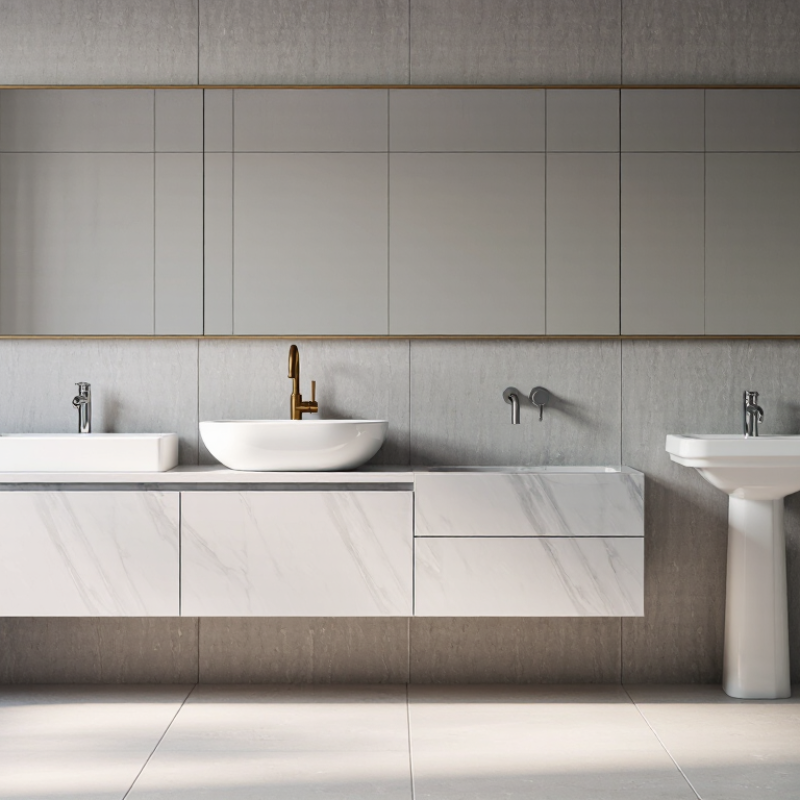
Common Vanity Sink Styles and Their Defining Features
What Are the Top Vanity Sink Types?
Common Vanity Sink Styles and Their Defining Features
Choosing a vanity sink starts with understanding its shape, installation method, and daily demands. Undermount sinks sit below the countertop edge, creating a smooth surface that wipes clean easily. They suit busy bathrooms and stone countertops. Drop-in sinks have a visible rim resting on the counter. Installation is simpler, and replacement is often less disruptive. However, the raised edge can collect moisture and dust.
Vessel sinks sit above the vanity like a shallow bowl. They add height and a strong visual focus. Tall users may appreciate the elevated basin, while shorter users could find it less comfortable. Splash control also needs attention.
I once underestimated this detail in a compact bathroom. Water reached the mirror more often than expected.
Integrated sinks combine the basin and countertop in one continuous surface. Fewer seams can mean easier cleaning, but repairs may require replacing a larger section.
Wall-mounted sinks attach directly to the wall and leave floor space underneath. They work well in narrow rooms and accessible layouts. Their exposed plumbing must look intentional and remain easy to service.
Measure the wall structure carefully before installation. A beautiful sink can still feel wrong if the faucet reach, basin depth, and user height do not align. Consider real routines, not only photographs. Towels, soap, and cleaning tools need nearby space.
Undermount Sinks for a Seamless Vanity Surface
Undermount sinks are a leading choice for a seamless vanity surface. They sit beneath the countertop, leaving the basin edge hidden from view. With no exposed rim, water and toothpaste can be swept directly into the bowl. This creates clean lines and makes the vanity feel more spacious. I have found this detail especially useful in compact bathrooms. It looks simple.
Installation demands careful planning. The countertop must have a precise sink cutout and strong support beneath the basin. A qualified installer should seal the joint properly to reduce moisture intrusion. Stone and solid-surface countertops usually suit this style well, while some materials may need extra reinforcement. The faucet position also matters because a narrow rear ledge can make cleaning difficult. I once assumed every undermount sink would fit any vanity top. That assumption was wrong.
Daily care is straightforward. Wipe the surrounding surface after use, especially near the faucet and back corners. Standing water can slowly discolor grout, sealant, or porous surfaces. Choose a basin with a gentle slope and a practical drain position. Deep bowls can reduce splashing, but they may limit storage below the vanity. Check cabinet clearance before ordering. An undermount sink offers a refined finish, yet its success depends on accurate measurements, durable sealing, and realistic maintenance habits.
Vessel Sinks for a Distinctive Above-Counter Design
What Are the Top Vanity Sink Types?
Vessel sinks create a distinctive above-counter design by sitting visibly on the vanity surface. Their raised bowl becomes the room’s focal point, especially against stone, timber-look, or matte porcelain tops. The profile feels architectural. It also exposes more of the basin, making color, texture, and shape easier to appreciate.
Houzz’s 2024 U.S. Bathroom Trends Study reported a median spend of $35,000 for major primary-bathroom remodels. That investment makes proportion and installation accuracy important. A vessel basin usually needs a compatible countertop cutout, a taller faucet, and carefully planned drain height. Experienced installers also check splash zones before fixing the vanity. Water can collect around the rim when the counter lacks a slight slope or adequate sealing. Small details matter.
Cleaning is another practical concern. A raised basin leaves more exposed surfaces around its base, so dust and spilled water may become noticeable. This is not a deal-breaker. It is a maintenance trade-off. The National Kitchen & Bath Association’s 2024 Bath Design Trends report highlights personalized, statement-focused bathroom design, and vessel sinks support that direction without changing the entire layout. Yet visual drama can reduce everyday convenience if the basin sits too high for children or shorter users. A sample mock-up with tape and cardboard can reveal that problem before installation.
What Are the Top Vanity Sink Types? - Vessel Sinks for a Distinctive Above-Counter Design
| Vessel Sink Type | Typical Materials | Common Shape | Typical Size Range | Installation Characteristics | Main Advantages | Key Considerations |
| Ceramic or Porcelain | Vitreous china, porcelain, ceramic | Round, oval, rectangular | 16–24 in. wide; 4–8 in. high | Sits above the counter and usually requires a countertop cutout for the drain | Smooth, nonporous surface; easy to clean; widely available | Can chip or crack from strong impact; height must be planned with the vanity |
| Tempered Glass | Tempered glass | Round, oval, bowl-shaped | 16–20 in. wide; 4–6 in. high | Requires a stable, level counter and a compatible drain assembly | Creates a light, contemporary appearance; many translucent color options | Water spots and fingerprints are more visible; abrasive cleaners can damage the surface |
| Natural Stone | Granite, marble, travertine, onyx | Round, oval, rectangular | 16–22 in. wide; 4–8 in. high | May require reinforced cabinetry or countertop support because of its weight | Distinctive natural veining and a substantial, high-end appearance | Porous varieties need periodic sealing; acidic cleaners may etch some stones |
| Solid Surface | Acrylic, resin-based composite | Round, oval, rectangular | 16–22 in. wide; 4–7 in. high | Light to moderate weight; installation depends on the counter and drain design | Consistent color; nonporous; minor surface damage may be repairable | Can scratch or discolor when exposed to harsh chemicals or excessive heat |
| Stainless Steel | Stainless steel | Round, oval, rectangular | 16–22 in. wide; 4–7 in. high | Usually straightforward to mount when the counter is properly supported | Durable, relatively lightweight, and resistant to rust when properly maintained | May show water spots, scratches, and fingerprints; can sound louder under running water |
| Copper or Metal | Copper, brass, bronze | Round, oval, hammered bowl | 16–22 in. wide; 4–8 in. high | Needs a compatible drain and careful protection during installation | Adds texture, warmth, and a decorative focal point to the vanity area | Finish may change over time; cleaning products must match the metal type |
Dimensions are typical planning ranges rather than universal standards. Confirm the sink, faucet, drain, countertop, and vanity specifications before installation.
Drop-In Sinks for Straightforward Installation
Drop-in sinks are a practical choice for vanity renovations, especially when installation time matters. Their rim rests on the countertop, so the cutout does not need the same precision as an undermount model. A qualified installer can set the basin, apply a continuous seal, and connect the drain with fewer complicated steps. This can reduce labor, although countertop thickness and cabinet clearance still require careful checking.
The 2024 Leading Indicator of Remodeling Activity from Harvard’s Joint Center for Housing Studies projected nearly $485 billion in annual homeowner improvement and maintenance spending. With budgets under pressure, straightforward installation has real value.
A drop-in sink also works well with laminate, stone, solid-surface, and some tile countertops. Measure the vanity opening twice. A small error can leave an uneven rim or expose unfinished material. The sink should sit level, with enough space behind it for the faucet and backsplash.
I have found that a fast installation can still create slow problems when the drain alignment is ignored. One caveat: raised rims collect water and require regular wiping.
The U.S. Environmental Protection Agency states that WaterSense-labeled bathroom faucets use no more than 1.5 gallons per minute, potentially reducing flow by more than 30 percent without sacrificing performance.
Tips: Choose a sink with a clear template. Dry-fit the basin before sealing. Check the overflow opening, drain position, and cabinet doors. A modest silicone bead is better than excessive sealant. Test for leaks after several minutes, not immediately.
Integrated and Wall-Mounted Sinks for Modern Bathrooms
Integrated and wall-mounted sinks are defining modern bathroom design. They offer clean geometry, easier cleaning, and a lighter visual footprint.
An integrated sink forms one continuous surface with its countertop, reducing joints where water and soap residue collect.
Wall-mounted sinks attach directly to the wall, leaving visible floor space beneath. That openness can make a compact bathroom feel noticeably larger.
The 2024 U.S. Houzz Bathroom Trends Study indicates that roughly one-third of renovating homeowners enlarge their bathrooms. Space efficiency matters. The National Kitchen & Bath Association’s recent design-trend reporting also highlights streamlined storage and accessible layouts as continuing priorities among professionals.
In practice, integrated models suit family bathrooms because they provide broad counter space. Wall-mounted designs work well in narrow rooms, especially when paired with shallow drawers or a concealed trap. However, wall-mounted installation demands reinforced framing and accurate plumbing heights.
A poor measurement becomes expensive quickly. I have seen elegant layouts fail because the basin sat too high for children or too low for taller users.
Tips: Check the wall structure before ordering. Leave at least a small splash zone beside the faucet. Choose a matte, nonporous surface for simpler maintenance. Integrated sinks can be difficult to repair if the countertop chips. Wall-mounted sinks may also expose plumbing, which is not always attractive. Test the height with masking tape first. Small errors remain visible.