

A Shower Arm may look like a small plumbing component, but it strongly affects comfort, spray coverage, and bathroom appearance. Its length, angle, material, and mounting position determine whether water falls gently over your shoulders or strikes the wall. Choosing the right design also depends on ceiling height, user height, water pressure, and the existing plumbing connection.
Industry guidance makes this choice more practical. The U.S. Environmental Protection Agency’s WaterSense showerhead specification limits certified products to 2.0 gallons per minute, while federal standards allow up to 2.5 gallons per minute. This distinction shows why a shower arm should be evaluated with the showerhead, not separately. A long extension arm may improve reach, but it can also create leverage against a weak wall connection. Small details matter.
Bathroom renovation research supports this broader view. The National Kitchen & Bath Association’s design reports continue to highlight functional, accessible, and personalized shower spaces. Houzz’s U.S. Bathroom Trends Study also shows sustained homeowner investment in upgraded shower areas. These findings do not identify one perfect arm for every bathroom. They suggest a better approach: compare real installation conditions before following style trends.
This guide examines the top 10 types of Shower Arm, including straight, S-shaped, ceiling-mounted, adjustable, and extension models. Each type serves a different purpose. Some maximize flexibility. Others save space. A few simply look better. The ranking is not absolute. It depends on the room, the plumbing, and the person using it. Expect useful comparisons, but leave room for practical judgment.
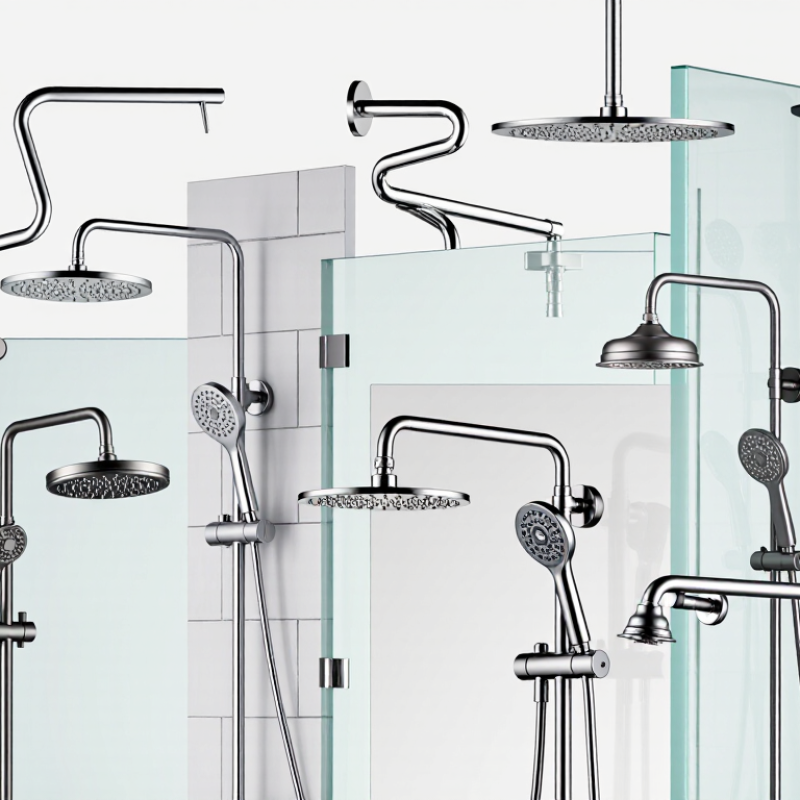
What Are the Top 10 Types of Shower Arms?
A shower arm is the pipe connecting the wall or ceiling supply to the showerhead. It controls reach, height, and spray position. Its main features include connection size, projection, material, finish, angle, and mounting direction. Common designs include straight, adjustable, extension, swan-neck, gooseneck, S-shaped, ceiling-mounted, square, round, and dual-outlet arms.
Small differences matter. A short straight arm keeps water near the wall, while an extension arm creates more shoulder room. A swan-neck arm raises the showerhead without opening the wall. Adjustable models help users correct awkward angles. Ceiling arms produce a rainfall position, but they require accurate overhead plumbing. Round and square profiles mainly affect appearance and cleaning access.
Fit comes before decoration.
The U.S. Environmental Protection Agency’s WaterSense specification limits certified showerheads to 2.0 gallons per minute, compared with the federal maximum of 2.5 gallons. The EPA also reports that a WaterSense showerhead can help an average family save about 2,700 gallons of water annually. These figures show why arm design should support efficient spray coverage, not simply add length. In practical installations, I have seen attractive arms fail because their projection was measured from the wrong wall surface. That mistake is easy to make. Thread compatibility, escutcheon depth, wall reinforcement, and the showerhead’s weight deserve equal attention. Some manufacturers publish precise dimensions, yet field conditions can still vary. A careful installer should verify the existing outlet before choosing among the ten forms.
Among the top 10 shower-arm types, wall-mounted models remain practical for many bathroom layouts. Straight arms keep the showerhead close to the wall, while extended arms move water farther over the user’s shoulders. Adjustable arms add flexibility through a sliding joint or pivoting connection. Small details matter. A 90-degree elbow, uneven tile, or low ceiling can change the spray position noticeably.
The U.S. Environmental Protection Agency states that WaterSense showerheads use no more than 2.0 gallons per minute, compared with the federal 2.5-gallon limit. The arm does not control flow, but its length and angle affect comfort, splash, and perceived pressure. During installation, I measure from the finished floor to the showerhead, not from the rough wall. That simple habit prevents avoidable height errors. Extended arms can improve coverage, yet they place more leverage on the threaded fitting. Strong internal support is essential.
The 2024 Houzz U.S. Bathroom Trends Study reported that 84% of renovating homeowners upgraded their showers. This demand explains the popularity of adjustable wall-mounted designs. They suit shared bathrooms, changing user heights, and occasional mobility needs. Still, adjustable joints may loosen over time, especially with repeated movement. Straight arms look cleaner, but they offer fewer corrections after installation. Extended styles provide reach, though they can feel visually heavy in compact rooms. I once favored the longest arm available. That was not always wise. Measure twice. The best choice balances reach, rigidity, spray position, and the finished wall’s actual structure.
| Type | Design | Typical Reach or Adjustment | Best Suited For | Considerations |
|---|---|---|---|---|
| 1. Standard Straight Arm | A simple horizontal pipe that connects a wall outlet to a showerhead. | Often projects about 5–7 inches from the wall; dimensions vary by model. | Replacing a basic shower arm or keeping the showerhead close to the wall. | Check the arm’s reach and threaded connection against the existing installation. |
| 2. Short or Compact Arm | A straight arm with a relatively short projection. | Commonly about 3–5 inches of reach. | Small shower enclosures or installations where extra projection is not needed. | A shorter arm may leave less room beneath the showerhead. |
| 3. Extended Straight Arm | A longer horizontal arm that brings the showerhead farther into the shower space. | Often about 8–12 inches long. | Moving the spray away from a wall or providing more clearance for the user. | Confirm that the added reach will not place the showerhead outside the enclosure. |
| 4. Extra-Long Straight Arm | A long, fixed horizontal arm designed for greater projection. | Some models extend roughly 12–16 inches; available lengths differ. | Wide shower spaces or situations where a substantial outward reach is desired. | Longer arms create more leverage at the wall connection and should be properly supported. |
| 5. Adjustable-Angle Arm | A wall-mounted arm with a pivoting or swiveling section that changes the showerhead angle. | Angle adjusts at the joint; the range depends on the design. | Users who want to redirect the spray without changing the wall outlet. | Verify that the joint locks securely and is compatible with the showerhead. |
| 6. Adjustable-Extension Arm | An arm with a movable or telescoping section for changing the showerhead’s position. | Reach and height adjustment vary by product. | Households needing a more flexible showerhead position. | Moving parts require secure locking; follow the product’s installation instructions. |
| 7. Curved or Gooseneck Arm | A curved arm that raises and projects the showerhead away from the wall. | Rise and projection vary; many designs add several inches of height and reach. | Adding overhead clearance or repositioning a showerhead without relocating the wall outlet. | Measure the finished height and projection before purchase. |
| 8. S-Shaped or Offset Arm | A bent arm that shifts the showerhead’s position relative to the wall connection. | Offset amount depends on the bends and overall arm length. | Correcting a showerhead position that is too close to the wall or slightly misaligned. | Check the direction of the offset and ensure the showerhead clears nearby surfaces. |
| 9. Right-Angle Arm | A wall-mounted arm with a pronounced 90-degree bend, typically extending horizontally before the showerhead connection. | Projection is determined by the horizontal section; models vary. | A clean, angular look or a specific showerhead position in a modern installation. | Confirm the outlet orientation and available clearance before fitting. |
| 10. Dual-Outlet or Diverter Arm | A wall-connected assembly with separate outlets, commonly used to connect a fixed showerhead and a handheld shower. | Position and outlet layout depend on the assembly. | Showers that need both an overhead showerhead and a handheld option. | Check compatibility with the showerhead, hose, and water connections; some setups may require a separate diverter. |
| Note: Reach and adjustment figures are general examples, not universal specifications. Actual dimensions, connection standards, and installation requirements vary by product and plumbing setup; measure the existing outlet and shower space before choosing an arm. | ||||
Ceiling-mounted shower arms are one of the most distinctive choices among the top ten shower arm types. They place water directly above the user, creating a balanced, rain-like flow. Fixed ceiling arms suit clean, minimal bathrooms. Drop arms lower the showerhead and work better beneath high ceilings. Rain shower designs spread water widely, like standing under a soft summer cloud.
Installation height matters more than many homeowners expect. A drop arm can prevent a tall user from bending, but an oversized rainhead may splash beyond the shower area. The 2024 Houzz U.S. Bathroom Trends Study identifies upgraded showers as a major renovation priority. That interest supports practical planning, not just visual styling. During installation, I measure the user’s height, ceiling clearance, drain position, and wall slope. Small errors become obvious when water hits the floor.
Water efficiency also deserves attention. The U.S. Environmental Protection Agency’s WaterSense specification limits certified showerheads to 2.0 gallons per minute at 80 psi. That is 20 percent below the federal 2.5-gallon-per-minute standard. A ceiling rain shower can still feel generous with correct spray design and pressure. Bigger is not always better. I have seen large heads installed in narrow enclosures, creating cold walls and slippery floors. The design looked impressive, but the daily experience needed more thought.
The chart compares representative reach or drop lengths commonly used in residential shower installations. Wall-mounted arms are measured by horizontal projection, while ceiling-mounted arms are measured by vertical drop. Actual dimensions vary by installation height, showerhead size, plumbing layout, and local building requirements.
Shower arms come in many forms, including straight, curved, ceiling-mounted, extension, adjustable, wall-swivel, slide-bar, handheld, dual-outlet, and filtered designs. For handheld and dual shower systems, the arm is more than a water connection. It controls reach, hose movement, spray height, and daily comfort.
A dual-outlet shower arm usually supports a fixed showerhead and a handheld sprayer. Look for separate flow controls and a sturdy diverter. A weak diverter can reduce pressure or cause unwanted dripping. I have found that brass or corrosion-resistant stainless steel feels more dependable during installation. However, material alone does not guarantee quality. Thread accuracy matters just as much.
Adjustable shower arms help different users share one shower without awkward bending. A swivel arm can direct water toward a seated user, while a slide-bar arm offers flexible handheld positioning. Keep the hose outlet below the fixed head to reduce kinks. Measure twice. A few millimeters can change the final angle. Wall strength also deserves attention, especially with longer arms and heavier handheld holders. I once focused too much on appearance and overlooked the mounting surface. The result was usable, but not as stable as expected. Leak testing should include every joint, even those hidden behind decorative covers. Small gaps become obvious later.
Comparing the top ten shower arm types requires more than appearance. Fixed wall arms are simple and affordable, while rain, ceiling, and gooseneck arms change spray height and coverage. Extension arms help older bathrooms, but extra projection can increase impact risk. Handheld, slide-bar, and dual systems improve reach and cleaning. Adjustable-angle and swivel arms solve alignment problems. Body-spray arms create a spa effect, yet they demand careful pressure planning.
Water use should be measured, not guessed. The U.S. Environmental Protection Agency’s WaterSense specification limits labeled showerheads to 2.0 gallons per minute at 80 psi, below the federal 2.5-gallon limit. That matters when comparing dual or multi-spray systems. A larger spray face may feel gentler, but it does not automatically deliver better performance. Check flow ratings, minimum pressure, hose length, and valve capacity. Small details matter.
Installation conditions can decide the best choice. A ceiling arm may require access above the enclosure, while a wall-mounted arm usually fits existing plumbing more easily. For accessible showers, ADA Standards reference handheld spray units with hoses at least 59 inches long. Local plumbing rules still need verification. Test the arm’s height with the user standing inside the wet area. Fixtures can look perfect on paper. In practice, a gooseneck may feel too high, and a short extension may splash outside the enclosure. My comparison would also include cleaning access, finish durability, joint stiffness, and future cartridge replacement. Fancy is not always practical.
