

Choosing the right packaging can shape how customers judge a cosmetic before they try it. Plastic Cosmetic Bottles offer a practical balance between appearance, protection, and manufacturing efficiency. They can hold cleansers, lotions, serums, shampoos, and many other formulas.
The details matter. A 100 ml bottle may fit neatly beside a bathroom mirror. A pump can reduce mess and control each dose. A lightweight container can lower shipping weight and make daily handling easier. Plastic also allows brands to explore clear, frosted, colored, soft-touch, and recycled-material finishes. These choices create a physical brand language.
Marketing scholar Philip Kotler has described packaging as a product’s “silent salesman.” That idea remains useful. A bottle communicates before its label is read. However, attractive design alone is not enough. The material must suit the formula, closure, filling process, and expected shelf life. Testing is essential.
Not every plastic bottle is automatically sustainable. That is uncomfortable, but important. Excessive decoration, mixed materials, and oversized containers can weaken an otherwise responsible design. Brands should examine recycled content, recyclability, durability, and regional waste systems. Claims must remain specific and verifiable.
From practical packaging experience, the strongest option is rarely the most complicated one. It is the bottle that protects the formula, feels comfortable, supports efficient production, and matches customer expectations. Plastic Cosmetic Bottles can achieve that balance when design decisions follow evidence rather than fashion alone. Small improvements matter. Perfect solutions are uncommon.
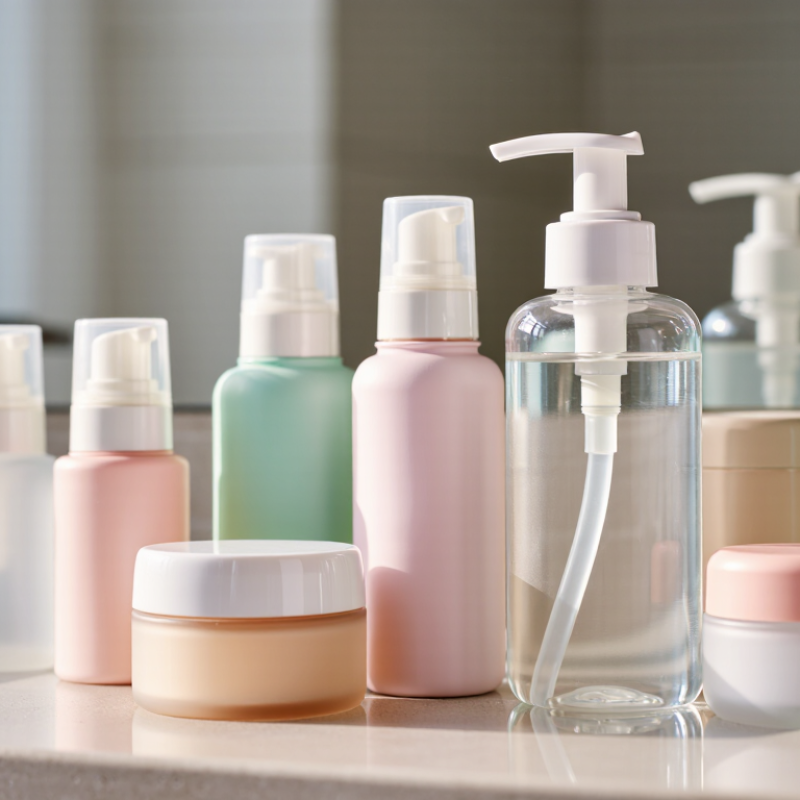
Plastic cosmetic bottles are lightweight containers designed for skincare, haircare, and personal-care products. Common materials include PET, HDPE, and PP. Each material offers different levels of clarity, strength, flexibility, and chemical resistance. A facial cleanser may use a firm pump bottle, while a thin serum may need a controlled dropper or treatment pump. Sprayers suit mists, toners, and lightweight lotions.
In practical packaging development, the bottle must match the formula, not just the visual concept. Oil-rich products can affect some plastics over time. Essential oils may also weaken unsuitable components. Compatibility testing should check color changes, swelling, leakage, odor, and pump performance. Drop tests and repeated opening tests matter too. A beautiful bottle can still fail in a bathroom cabinet. The lightest option is not always the most responsible choice, because weak walls may increase damage and returns. That trade-off deserves honest review.
Tips: Match the closure to the product’s thickness. Check the neck size before ordering pumps or droppers. Request sample bottles for formula testing. Test labels on cool, warm, and humid surfaces. Clear plastic looks clean, but it may offer less light protection. Consider tinted or opaque packaging when the formula is light-sensitive. Also, leave enough headspace for filling and temperature changes. Small details often decide whether packaging feels reliable.
Why Choose Plastic Cosmetic Bottles for Your Brand?
Cosmetic packaging offers more choices than clear PET bottles. PET provides transparency, light weight, and strong resistance to many formulas. HDPE feels sturdy and protects products from light. PP performs well for pump parts, caps, and flexible containers. PCR plastic can reduce demand for virgin resin, but its color and consistency may vary. The OECD’s Global Plastics Outlook (2022) reports that packaging represents about 40% of global plastic use. The same report says only 9% of plastic waste is recycled. That gap matters.
Design changes performance. Airless bottles help limit air exposure and reduce product waste during dispensing. Wide-mouth jars suit creams, while squeeze tubes support controlled application. Mono-material designs may simplify sorting compared with packages combining plastic, metal, and mixed layers. Refillable systems can also reduce single-use consumption, although they require durable components and convenient cleaning. UNEP’s 2023 Turning off the Tap report estimates that reuse systems could reduce global plastic pollution by 30% by 2040. Still, reuse is not automatically better. Transport distance, washing energy, and return rates need real testing. I would not treat PCR as a magic label. A beautiful bottle can remain difficult to recycle if its pump, coating, or sleeve cannot be separated. Packaging teams should test formula compatibility, drop resistance, closure performance, and local recycling access before choosing a final design.
Plastic bottles are widely used in cosmetics because they are lightweight, impact-resistant, and compatible with pumps, caps, droppers, and airless dispensing systems. PET provides high clarity, HDPE offers strong chemical resistance, and PP is suitable for flexible and heat-resistant components. Glass and aluminum are also available when a premium appearance or strong material barrier is required.
The chart compares typical material density values. Values shown are midpoints of commonly reported ranges: PP 0.90–0.91, HDPE 0.94–0.97, PET 1.33–1.40, glass 2.40–2.60, and aluminum about 2.70 g/cm³. Available designs include round, oval, square, cylindrical, airless, pump, spray, and dropper bottles.
Why do brands choose plastic bottles for cosmetics? The answer usually begins with control. Polyethylene terephthalate (PET), high-density polyethylene (HDPE), and polypropylene (PP) offer different balances of clarity, toughness, and chemical resistance. A 100 ml facial serum bottle can survive filling lines, warehouse vibration, and a bathroom shelf with less breakage risk than glass. Plastic also supports precise neck finishes, pumps, and flip-top closures. That flexibility helps teams match viscosity, dosage, and user habits.
The choice is also financial and operational. PlasticsEurope’s Plastics—The Fast Facts 2023 reports that packaging represented 39.3% of European plastics demand in 2022. This scale supports established converting equipment and broad material availability. Smithers’ 2024 market analysis also highlights continued demand for lightweight cosmetic packaging. Lightweight matters. Lower pack weight can reduce transport energy and handling injuries, depending on resin, distance, and recycling systems. A lighter bottle is not automatically a better bottle.
There is a harder question. The OECD’s Global Plastics Outlook found that only 9% of plastic waste was successfully recycled in 2019. That figure should temper easy sustainability claims. Experienced packaging teams test wall thickness, drop performance, formula compatibility, label separation, and recycled-content availability before approval. Recycled PET can look slightly different. Pumps still complicate recovery. Brands choose plastic because it is practical, but responsible decisions require local collection data, clear material identification, and honest end-of-life testing.
| Evaluation Dimension | Plastic Cosmetic Bottles | Common Plastic Material | Practical Brand Benefit | Data Basis |
|---|---|---|---|---|
| Material weight | Generally lighter than glass for comparable packaging formats. | Typical densities: PP about 0.90–0.91 g/cm³; HDPE about 0.94–0.97 g/cm³; PET about 1.34–1.39 g/cm³; glass about 2.5 g/cm³. | Lower packaging weight can support easier handling and more efficient transport planning. | Engineering material-property references and manufacturer technical data. |
| Breakage resistance | Most cosmetic-grade plastics are resistant to shattering during normal handling. | HDPE, PP, and PET are commonly selected for their toughness and impact resistance. | Helps reduce the risk of broken containers during filling, storage, shipping, and everyday use. | Typical performance characteristics of packaging polymers; actual results depend on bottle design and testing. |
| Design flexibility | Can be molded into round, square, oval, oval-shoulder, airless, and other custom shapes. | PET is often used for clarity; HDPE and PP are commonly used for opaque or functional designs. | Supports distinctive silhouettes, ergonomic grips, integrated dispensing features, and varied surface finishes. | Common injection molding, extrusion blow molding, and injection stretch blow molding applications. |
| Product visibility | Can be transparent, translucent, or opaque. | PET is commonly available in clear formats; colorants and additives can produce translucent or opaque effects. | Clear bottles can display the product level and color, while opaque bottles can help protect light-sensitive formulas. | Packaging design practice; light protection depends on resin, color, wall thickness, and formulation requirements. |
| Closure compatibility | Compatible with screw caps, disc tops, flip tops, pumps, sprayers, and dispensing closures. | Bottle necks can be specified using industry-standard finish dimensions. | Enables packaging options for lotions, shampoos, cleansers, serums, and other personal-care products. | Common cosmetic packaging specifications; compatibility must be verified through fit and leakage testing. |
| Chemical compatibility | Can provide good compatibility with many water-based and oil-containing cosmetic formulas. | HDPE, PP, and PET have different resistance profiles; essential oils, solvents, acids, and alcohols require specific testing. | Allows material selection based on the formula rather than using one packaging material for every product. | Formula-specific compatibility, migration, stress-cracking, and stability testing. |
| Recycling identification | Common resin identification codes include #1 PET, #2 HDPE, and #5 PP. | PET, HDPE, and PP are established packaging polymers with recycling streams in some markets. | Clear resin identification can support sorting and recycling communication. | ASTM resin identification system; local collection and recycling access varies by region. |
| Recycled-content options | PCR PET and PCR HDPE are commercially used in packaging, subject to quality and supply requirements. | Recycled content may affect color, clarity, odor, mechanical properties, and regulatory suitability. | Provides a route to include recycled material while maintaining a familiar bottle format. | Recycled-content packaging practice; percentages and availability depend on supplier and market. |
| Decoration options | Supports pressure-sensitive labels, in-mold labels, screen printing, hot stamping, and direct decoration. | Surface treatment may be required for reliable adhesion on some polyolefin surfaces. | Offers flexibility for product information, color systems, finishes, and premium visual effects. | Standard decoration methods used in cosmetic and personal-care packaging. |
| Manufacturing scalability | Suitable for high-volume production using established molding and filling processes. | Production efficiency depends on bottle size, wall thickness, mold design, resin grade, and order volume. | Makes plastic suitable for both standardized packaging programs and customized product lines. | Common industrial packaging production methods; actual lead times and economics require a project quotation. |
Plastic cosmetic bottles can turn product protection into a visible brand asset. Their shapes, colors, surface finishes, and label areas create recognition before the cap opens. PET offers a clear, polished appearance, while HDPE and polypropylene provide a solid, practical feel. Custom shoulder lines or textured grips can also improve handling in wet bathrooms.
Protection depends on more than appearance. A well-matched bottle limits leakage, supports controlled dispensing, and helps shield formulas from handling and contamination. Pumps, flip-top caps, and tamper-evident seals add useful reassurance. Packaging teams should test drop resistance, closure torque, chemical compatibility, and light exposure. Small failures matter. A beautiful bottle that leaks is still a poor package.
The OECD’s Global Plastics Outlook reports that packaging generated about 40% of global plastic waste in 2019, while only 9% of plastic waste was ultimately recycled. That figure should influence design decisions. Use fewer material types, reduce unnecessary weight, and clearly identify compatible components where possible. A lighter bottle may reduce transport emissions, but lightweight walls can feel cheap or collapse under pressure. That trade-off needs real testing, not assumptions. Data from Smithers’ sustainable packaging research also shows growing pressure for recyclable and resource-efficient formats, making protection and end-of-life planning equally important.
Plastic bottles offer practical flexibility, but appearance should not drive the decision. PET provides clarity and a polished shelf presence. HDPE offers stronger chemical resistance and a softer, opaque look. PP performs well when heat tolerance or repeated use matters. The formula must come first. Oils, acids, alcohol, and fragrances can interact with plastic over time. A bottle may look perfect during sampling, yet develop stress cracks after filling. That lesson is easy to overlook.
Tips: Request compatibility testing with the actual formula. Check wall thickness, closure fit, pump output, and leakage after transport simulation. Ask suppliers for material specifications, batch controls, and migration or stability data when relevant. Test samples at different temperatures. Real warehouses are rarely gentle.
Sustainability also needs careful evaluation. Lightweight plastic can reduce shipping weight, but recyclability depends on the material, color, labels, pumps, and local collection systems. Recycled content may support environmental goals, although supply consistency can vary. Do not rely on a vague “eco-friendly” claim. Review measurable information and document each decision. A refillable format may sound attractive, but customers may reject it if cleaning feels difficult. In packaging reviews, small details often decide success: a cap that loosens in a handbag, a pump that stops early, or a bottle that feels too thin. Premium design is not always better design.
