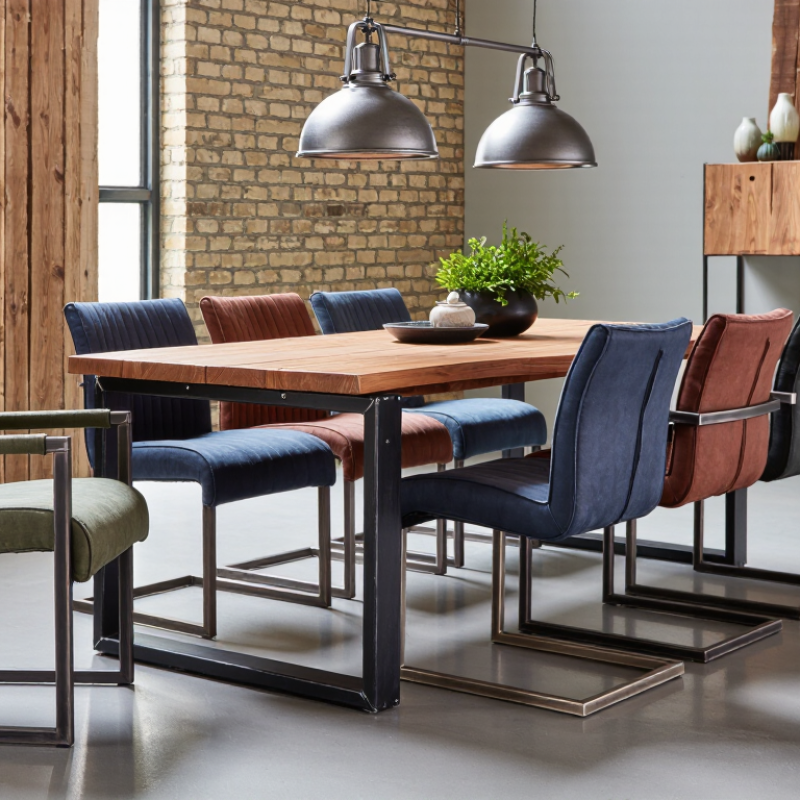
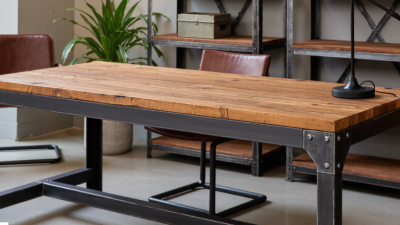
Industrial furniture aesthetics are moving beyond exposed brick, black steel, and reclaimed timber. Global buyers now expect character, durability, and practical performance in the same product. A warehouse-inspired dining table may feature a powder-coated frame, visible weld marks, and a warm oak surface. These details create authenticity without making a room feel unfinished.
Market data supports this broader shift. Grand View Research’s Furniture Market Size, Share & Trends Analysis Report, 2023–2030, estimates the global furniture market reached approximately USD 677 billion in 2022. The report also identifies material innovation, online retail, and changing residential preferences as major growth influences. Mordor Intelligence’s Furniture Market analysis for 2024–2029 similarly highlights customization, modular products, and sustainability as important competitive factors. However, these reports measure the wider furniture sector, not industrial style alone. That distinction matters.
Buyers are becoming more selective. They may compare steel thickness, finish consistency, load capacity, packaging quality, and repair options before approving a collection. Neutral palettes remain popular, but muted green, tobacco brown, and deep blue are gaining attention. Mixed materials add useful contrast. Think brushed metal beside textured leather, or rough wood beside smooth concrete-look surfaces.
Small details matter.
This guide examines the leading Industrial furniture aesthetics trends shaping international sourcing decisions. It considers visual appeal, manufacturing practicality, responsible material choices, and regional preferences. Some predictions remain uncertain. Style cycles change quickly, and a distressed finish may appear authentic in one market but poorly made in another. Good design still requires testing, honest specifications, and feedback from real users.
Top Industrial Furniture Aesthetics Trends for Global Buyers
Fortune Business Insights values the global furniture market at $546.3 billion in 2024. This figure shows broad demand, not guaranteed growth for every supplier. Industrial furniture benefits from that scale through flexible offices, cafés, hotels, and compact urban homes. Grand View Research valued the global office furniture market at about $103.8 billion in 2022. It also projects continued growth through 2030, supporting demand for durable, adaptable pieces.
Buyers increasingly request blackened steel frames, visible weld marks, and warm timber surfaces. These details create a workshop character without making rooms feel unfinished. Powder-coated metal usually improves scratch resistance during shipping and daily use. Reclaimed wood adds texture, but its moisture content needs careful inspection. A beautiful tabletop can still warp after installation.
Modular benches and nesting tables suit buyers managing changing floor plans. Upholstered seats with removable covers also support easier maintenance. The International Trade Centre highlights furniture as a major global trade category, but shipping costs remain a practical concern. Flat-pack construction may reduce volume, although assembly quality can vary between markets. This is where design teams sometimes overestimate aesthetics and underestimate after-sales support. Small samples help buyers assess grain, weld consistency, surface texture, and actual comfort before larger orders.
Industrial furniture is increasingly defined by its material signatures: metal, timber, leather, and concrete. Each surface contributes a different kind of visual weight.
Powder-coated steel gives tables and shelving a firm, architectural outline. Look for even coatings, clean welds, and stable joints. Small scratches may reveal poor finishing, but controlled wear can add character over time.
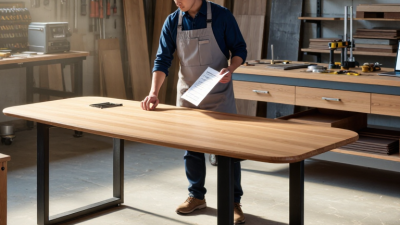
Reclaimed timber introduces warmth through visible grain, knots, and uneven edges. However, buyers should check moisture content and responsible sourcing records before approving large orders. Timber that looks authentic can still warp in humid environments.
Leather softens the harder industrial palette. Full-grain leather develops deeper color around seat edges and frequently touched areas. It needs conditioning, especially in dry commercial interiors.
Concrete creates a grounded, sculptural presence in counters, benches, and occasional tables. Its porous surface requires sealing, and careless handling can produce chips. That detail is easy to underestimate.
Tips: Combine one dominant material with two supporting textures. Pair blackened metal with warm oak and muted leather. Use concrete sparingly in small rooms, because its visual mass can quickly feel severe. Ask suppliers for finish samples, load ratings, maintenance instructions, and test pieces before placing a global order. Samples sometimes expose inconsistencies that photographs hide.
A reliable specification should balance appearance, performance, repairability, and transport risk. Industrial style is not simply about looking unfinished. It is about making honest materials work hard, while accepting that perfection may not be the most convincing result.
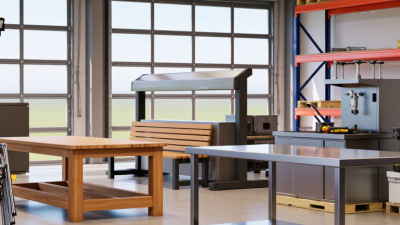
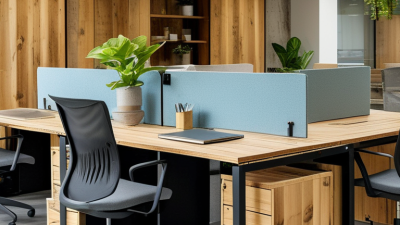
Commercial spaces are changing faster than fixed furniture can follow. Modular industrial furniture answers this pressure with steel frames, reclaimed-looking wood, casters, and replaceable panels. A table can become a six-person workstation by lunchtime. A partition can shift before a client presentation.
The 2024 Global Workplace Survey from Gensler reports that employees value workplaces supporting focus, collaboration, and social connection. One layout rarely serves all three needs. Modular benches, folding screens, and stackable stools allow buyers to create quieter corners without permanent construction. The detail matters: lockable wheels, concealed cable routes, and durable powder-coated finishes reduce daily friction. Small improvements count.
The commercial furniture market also reflects this demand. Grand View Research estimates the global office furniture market will continue expanding through 2030, driven partly by flexible workplace planning. Yet modularity is not automatically efficient. Poorly engineered joints loosen, storage modules become visual clutter, and lightweight components may fail under heavy use. Buyers should request load ratings, replacement-part availability, material certifications, and a documented testing method. That is less glamorous, but more reliable.
From an operational perspective Modular furniture works best when teams test one zone before specifying an entire project. Measure movement, noise, cleaning time, and reconfiguration effort. Industrial character should feel useful, not staged. A scratched surface may add warmth; an unstable desk simply creates another problem.
Circular aesthetics are reshaping industrial furniture for global buyers. In its Advancing Sustainable Materials Management report, the U.S. Environmental Protection Agency recorded 12.1 million tons of furniture and furnishings waste in 2018. About 80.2% was landfilled, revealing a costly design weakness.
The response is becoming visible and practical. Reclaimed timber can retain nail holes, saw marks, and uneven grain. Recycled steel may show controlled tonal variation instead of a perfect finish. Modular frames, replaceable panels, and mechanical fasteners help extend service life. These details support repair, disassembly, and material recovery, not just an “aged” appearance.
The United Nations Environment Programme reported in Global Resources Outlook 2024 that global resource extraction could rise by 60% from 2020 levels by 2060 without major changes. That projection makes material efficiency relevant to purchasing decisions. Buyers should request recycled-content evidence, durability testing, and clear end-of-life instructions. A supplier’s environmental claim is weaker without documentation.
Some circular styling remains performative. A distressed surface does not make a product recyclable. Nor does a reclaimed-looking finish reduce waste automatically. The better question is simple: can this table be repaired, separated, and used again? Sometimes, the answer is no. That gap deserves more attention.
For global commercial buyers, industrial furniture now faces a stricter test than visual appeal. BIFMA benchmarks often guide North American projects, while EN 16139 supports European selection of non-domestic seating. These frameworks examine strength, stability, durability, and user safety. They are not interchangeable certificates.
In factory and hospitality projects, I have seen buyers compare a steel chair by more than its welded frame. They check load capacity, repeated-use performance, sharp edges, surface protection, and replacement access. A dark powder-coated finish may suit an industrial interior, but poor coating adhesion can fail quickly near kitchens or coastal air. Details matter. Test reports should identify the tested model, load levels, test methods, and laboratory information. Vague claims create purchasing risk.
Dimensions also shape compliance. A compact chair may pass a strength test yet perform poorly when users sit heavily or move frequently. Tables need attention to tipping resistance, joint movement, and floor contact points. Buyers should request production samples and review traceability from material batch to final inspection. This takes time, but it exposes inconsistencies early. I once treated a supplier’s standard report as sufficient, and missed a change in seat construction. That was a costly reminder: certification evidence must match the exact commercial product. Some projects still prioritize a rustic appearance too heavily. A more reliable filter connects aesthetics with tested performance, documented maintenance, and realistic daily use.
| Aesthetic Trend | Visual and Material Characteristics | Typical Commercial Applications | Practical Product Dimensions | Buyer Screening Criteria | Relevant BIFMA / EN 16139 Considerations | Selection Implication |
|---|---|---|---|---|---|---|
| Refined Industrial Minimalism | Exposed metal details, restrained geometry, matte finishes, visible fasteners used selectively, and neutral tones such as charcoal, warm gray, sand, and off-white. | Co-working areas, reception zones, flexible offices, hospitality lounges, and multipurpose meeting rooms. |
Desk height: approximately 710–760 mm Worktop depth: approximately 600–800 mm Common table length: approximately 1,200–2,400 mm |
Stable frame Cable management Low-glare finish Replaceable components | For desks, applicable BIFMA desk-product requirements should be checked for stability, strength, durability, and load performance. Seating used in non-domestic settings should be assessed against the applicable EN 16139 requirements. | Choose simple silhouettes only when structural joints, leveling feet, and service access remain robust enough for repeated commercial use. |
| Warm Metal and Natural Wood Contrast | Powder-coated steel or aluminum combined with oak, ash, walnut-look, or wood-based panels; warm brown, terracotta, olive, and dark bronze accents soften the industrial character. | Restaurants, boutique hotels, executive waiting areas, cafés, libraries, and client-facing meeting spaces. |
Dining table height: approximately 710–760 mm Dining seat height: approximately 430–480 mm Recommended knee clearance: approximately 600 mm or more |
Moisture resistance Edge durability Scratch resistance Color consistency | EN 16139 is relevant to non-domestic seating and addresses safety, strength, and durability. BIFMA seating standards should be selected according to the seating type, such as office, lounge, or public-use seating. | Specify sealed or suitably finished wood surfaces and verify that decorative finishes do not reduce the product's cleanability or durability. |
| Softened Brutalism | Strong block-like forms, thick visual profiles, textured surfaces, rounded corners, upholstered volumes, and a palette built around concrete gray, clay, black, and muted beige. | Informal collaboration areas, lounge seating, creative studios, public interiors, and hotel common areas. |
Lounge seat height: approximately 380–460 mm Seat depth: approximately 480–600 mm Typical arm height: approximately 550–700 mm |
Anti-tip stability Foam recovery Seam strength Easy-clean upholstery | EN 16139 classification should match the expected intensity of use. Level 1 is generally associated with general use, while Level 2 is intended for more demanding use; the applicable test report should identify the selected level. | Balance oversized visual proportions with safe access, manageable product weight, stable bases, and upholstery specifications suitable for frequent public use. |
| Modular and Reconfigurable Systems | Repeatable modules, shared frames, detachable panels, interchangeable tops, stackable components, and neutral finishes designed to support layout changes. | Flexible offices, training rooms, universities, event venues, serviced offices, and project spaces. |
Common module widths: approximately 600–1,200 mm Training table depth: approximately 450–600 mm Typical clearance between rows: project-specific; verify local accessibility requirements |
Tool-light assembly Replaceable hardware Lockable casters Stacking efficiency | BIFMA desk and table-product requirements may apply to the complete assembled configuration. The configuration tested should match the marketed arrangement, including connectors, casters, screens, and accessories. | Request test evidence for the actual configuration rather than relying only on component-level performance claims. |
| Circular and Material-Transparent Industrial Design | Recycled or recyclable content, visible material separation, mechanical fasteners, mono-material parts, repairable construction, and finishes selected for long service life. | ESG-focused offices, public procurement, education, healthcare support areas, and large fit-out projects. |
Panel thickness: commonly approximately 18–25 mm for furniture panels Replaceable wear parts: glides, casters, upholstery covers, fasteners, and selected tops |
Material declaration Repair access Spare parts Low-emission finishes | BIFMA and EN 16139 primarily address product performance and safety; sustainability claims should be supported separately by verifiable material documentation, environmental declarations, or chain-of-custody evidence where applicable. | Treat durability as a circularity requirement: a product that can be repaired and remains structurally reliable can reduce replacement frequency in commercial environments. |
| Acoustic Industrial Comfort | Metal structures paired with felt screens, upholstered panels, perforated surfaces, acoustic baffles, and high-back lounge forms in muted, tonal color schemes. | Open-plan offices, libraries, call-focused work areas, airport lounges, and hospitality work zones. |
Work surface height: approximately 710–760 mm Screen height above worktop: commonly approximately 300–600 mm Office seat height: commonly approximately 400–520 mm, depending on adjustment range |
Posture support Screen stability Cleanable textiles Fire-performance documentation | Office seating should be evaluated against the applicable BIFMA seating standard. EN 16139 applies to non-domestic seating; acoustic performance is a separate specification and should not be inferred from structural compliance alone. | Separate ergonomic, acoustic, fire, and structural requirements during evaluation, then verify that the final assembled product satisfies all relevant project specifications. |
| High-Durability Public-Use Seating | Reinforced frames, rounded cleanable surfaces, compact footprints, replaceable upholstery elements, and dark or mid-tone colors intended to reduce visible wear. | Transport hubs, public waiting areas, food service, healthcare reception, education, and civic interiors. |
Single seat width: commonly approximately 450–550 mm Seat height: approximately 430–480 mm Typical row depth: project-specific; verify circulation and egress requirements |
Severe-use testing Impact resistance Tamper-resistant hardware Cleanability | EN 16139 Level 2 is commonly considered when seating is exposed to more demanding non-domestic use. The buyer should confirm the exact test level, product category, load assumptions, and test configuration. | Prioritize documented durability and maintenance access over decorative complexity when replacement, cleaning, and high turnover are expected. |
| Mobile and Height-Adjustable Workpoints | Light visual profiles, integrated casters, adjustable columns or legs, compact nesting forms, and finishes that coordinate with both industrial and contemporary interiors. | Hybrid offices, classrooms, workshops, training rooms, touchdown spaces, and multipurpose facilities. |
Seated work height: approximately 710–760 mm Standing work height: commonly approximately 950–1,250 mm Caster diameter: product-specific; select according to floor type and load |
Anti-collision design Load stability Caster locking Cycle durability | Applicable BIFMA desk-product requirements should be reviewed for stability, structural strength, and durability. Height-adjustable mechanisms may require additional product-specific verification beyond a general desk test. | Test the product at minimum and maximum operating heights and with realistic distributed loads, accessories, screens, and cable routing installed. |