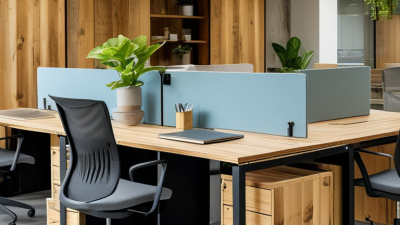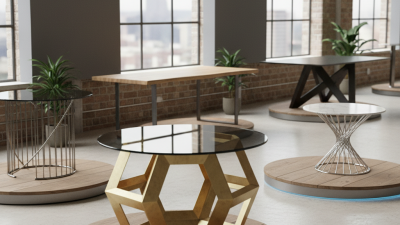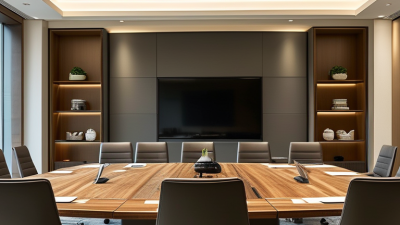

Open offices promised collaboration, yet many employees still struggle with ringing phones, keyboard noise, and nearby conversations. Acoustic furniture solutions respond with practical interventions: high-backed seating, booth systems, mobile screens, and sound-absorbing meeting pods. They do not make a room silent. They make speech clearer and distraction less persistent.
Gensler’s 2024 Global Workplace Survey emphasizes the value of varied work settings, including spaces for focused individual work and private conversations. The WELL Building Standard also treats acoustics as part of occupant comfort, addressing sound isolation, reverberation, and speech privacy. Grand View Research identifies commercial and office construction as important demand areas within the wider acoustic insulation market, with continued growth expected through 2030. These reports support a clear business case, but furniture performance still depends on room geometry, ceiling height, ventilation, and installation quality.
Sound expert Julian Treasure once warned, “We are losing our listening.” That warning matters here. Poor acoustic planning can quietly reduce concentration, comfort, and trust. Good products need measurable absorption data, durable materials, accessible maintenance, and credible testing. Appearance alone is not enough.
This China Top 10 list examines manufacturers through those practical criteria. It considers product engineering, customization, sustainability evidence, export experience, and real workplace usability. Some rankings remain debatable. They should. A stylish pod may perform poorly in a reverberant room, while a modest screen can deliver surprising value. The strongest Acoustic furniture solutions manufacturers understand that acoustic comfort is not a decorative feature. It is a working condition.
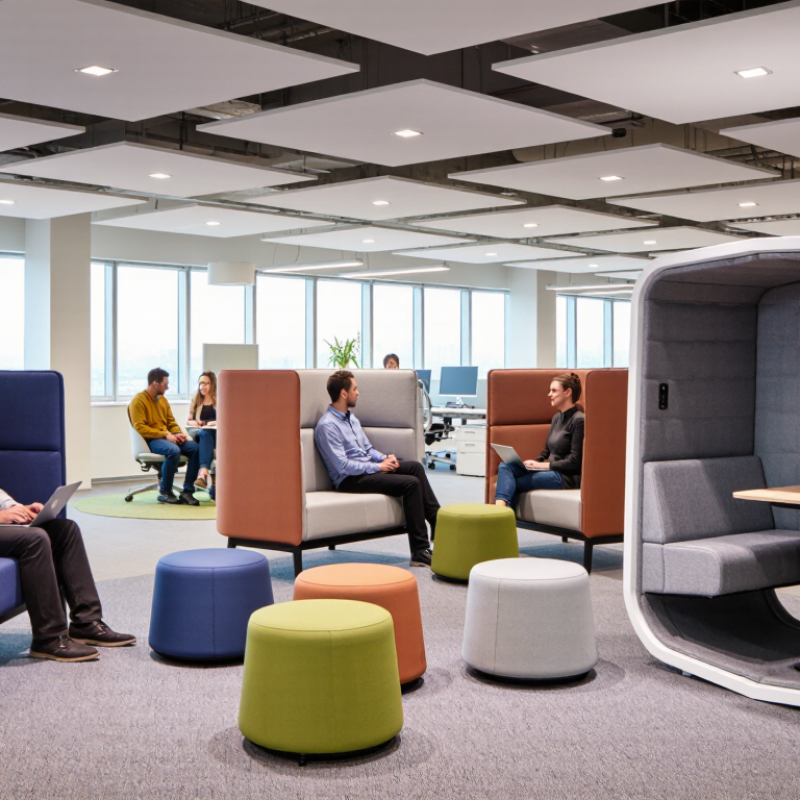
Acoustic furniture is movable workplace equipment designed to control sound, not merely decorate a room. It includes high-backed seating, felt screens, enclosed pods, acoustic booths, and ceiling-linked partitions. These elements absorb reflections and reduce speech spread around desks. ISO 3382-3:2012 evaluates open-plan offices through speech transmission, distraction distance, and spatial decay. Acoustic furniture supports these measurements, but it cannot replace proper room planning.
Its role is practical. A booth beside a collaboration zone can give one employee a quiet call space. A curved sofa with dense upholstery can soften echoes near a reception area. The Leesman Index has collected workplace feedback from more than one million employees. Its research repeatedly shows that privacy and suitable work settings influence workplace effectiveness. The World Health Organization also links excessive environmental noise with sleep disturbance, stress, and reduced well-being. Offices are not bedrooms, but the warning remains relevant.
Acoustic furniture is not a cure-all. Poor placement may create visual barriers without improving speech privacy. Our assumptions can be wrong. Teams should combine user interviews, occupancy observations, and acoustic measurements before purchasing. Performance depends on ceiling height, wall absorption, ventilation noise, and furniture density. A quiet-looking booth may still feel uncomfortable after twenty minutes. Better solutions leave room for testing, adjustment, and honest feedback.
A credible evaluation begins with tested performance, not attractive renderings. The European Environment Agency’s Noise in Europe 2020 report estimated that over 100 million Europeans face harmful road traffic noise exposure. Indoor acoustic control therefore deserves measurable evidence. Ask manufacturers for independent laboratory results under ISO 354, ISO 3382-3, or ISO 23351-1. Check sound absorption, reverberation time, and speech level reduction separately. They are not interchangeable.
Demand clear material details. A practical office booth may need a tested speech reduction of 15 dB or more, while surrounding panels should show their Noise Reduction Coefficient. Fire classification, formaldehyde emissions, recycled content, and fabric durability also matter. Request reports from accredited laboratories, not only factory spreadsheets. Verify whether testing covers the complete furniture assembly. Small gaps around doors can weaken real-world privacy.
Factory capability reveals reliability. Review production records, quality-control checkpoints, sample approval procedures, and replacement-part support. Ask how suppliers manage foam density, frame tolerances, ventilation noise, and installation errors. GSA’s Sound Matters guidance treats background noise, reverberation, and speech privacy as separate workplace variables. That distinction is useful. A booth with excellent absorption may still feel uncomfortable if its fan sounds harsh. I would not trust a high laboratory score alone. Visit a completed project when possible, measure occupied noise levels, and compare them with the supplier’s claims. Some specifications will remain incomplete. That is a reason to investigate further, not to guess.
China’s top 10 manufacturers of acoustic furniture solutions serve offices, hotels, libraries, and education spaces. Their product ranges often include acoustic booths, privacy sofas, meeting pods, desk screens, and movable partitions. Experienced factories usually combine upholstery, metalwork, woodworking, and sound-absorbing materials under one production system. This integration can reduce assembly errors and simplify quality control.
A reliable evaluation should begin with acoustic performance, not appearance. Ask manufacturers for independent test reports, absorption ratings, fire-safety documentation, and material declarations. Inspect how panels meet the frame. Check cable access, ventilation, lighting, and door alignment. A quiet booth still fails if it becomes hot after ten minutes. Manufacturers with export experience should also explain packaging tests, installation procedures, replacement parts, and delivery protection. Sample approval matters.
The ranking is not absolute. A polished catalog can mislead. Some manufacturers excel at custom dimensions, while others provide faster standard production. Buyers should compare laboratory data with real workplace trials. Place a pod beside a printer, then measure speech privacy during busy periods. Review fabric seams, edge finishing, caster strength, and cleaning access. Sustainability claims also need evidence, such as recycled-content records and responsible material sourcing. My practical concern is often overlooked: acoustic furniture must support daily behavior, not merely reduce noise on paper. Human comfort remains difficult to measure.
Leading acoustic furniture manufacturers serve different workplace needs, not one universal room. Their product categories include privacy booths, meeting pods, movable partitions, acoustic desks, wall panels, and ceiling baffles. Phone booths usually combine rigid frames, sealed doors, absorptive lining, ventilation, and low-noise fans. Meeting pods add larger glazing and stronger airflow systems. Open-plan workstations often use desk screens or suspended panels to reduce speech reflection near seated users. Small details matter. A poorly sealed door can weaken an otherwise effective enclosure.
Common acoustic technologies include PET felt, mineral wool, fiberglass, perforated timber, and microperforated boards. PET felt is lightweight and supports flexible visual designs. Mineral wool and fiberglass provide broad-band absorption when correctly covered. Perforated timber creates a warmer appearance, but its backing cavity needs careful engineering. Leading products may also use decoupled layers, acoustic seals, vibration-resistant joints, and tuned ventilation paths. These features manage airborne noise, reverberation, and equipment sound. They do not simply make furniture “quiet.” No single material solves every room.
A reliable specification compares laboratory data with actual site conditions. Look for absorption results tested under ISO 354 or ASTM C423, including the stated test setup. Ratings can mislead when installation details change. In practice, a ceiling baffle may perform well while nearby glass still reflects speech. Measure reverberation, background noise, and speech privacy after installation. I would also inspect cleanability, fire performance, replacement parts, and fan noise. Some catalogs overpromise. That deserves questioning before procurement. Design teams should request drawings, maintenance guidance, and independent test evidence before selecting products.
| No. | Product Category | Typical Acoustic Furniture Solution | Core Acoustic Technologies | Common Materials | Typical Applications | Key Performance Focus |
|---|---|---|---|---|---|---|
| 1 | Acoustic Office Pods | Single-person work pods and compact focus booths for private calls, online meetings, and concentrated work. | Sound absorption Sealed door system Ventilation noise control | PET acoustic panels, polyester fiber, laminated or veneered board, acoustic glass, rubber seals. | Open-plan offices, coworking spaces, libraries, reception areas. | Speech privacy, internal reverberation control, quiet ventilation, compact footprint. |
| 2 | Meeting Booths | Two- to six-person enclosed booths designed for small meetings, interviews, and hybrid collaboration. | Absorptive wall lining Acoustic glazing Door perimeter sealing | Fabric-wrapped acoustic panels, PET felt, acoustic laminated glass, engineered wood panels. | Corporate offices, shared workspaces, training centers, commercial interiors. | Reduced sound transfer, clear speech communication, visual connection, flexible installation. |
| 3 | Acoustic Conference Tables | Collaborative tables incorporating privacy screens, cable management, and localized sound absorption. | Desktop acoustic screens Micro-perforated surfaces Sound scattering | PET felt, perforated wood, acoustic laminate, powder-coated steel, solid-surface worktops. | Meeting rooms, project areas, boardrooms, flexible office zones. | Reduced speech distraction, improved room zoning, lower visual and acoustic clutter. |
| 4 | Acoustic Workstations | Modular desks with high- or mid-height acoustic dividers for individual and team work settings. | Direct sound blocking Sound absorption Modular partitioning | Recycled PET panels, mineral fiber boards, fabric upholstery, aluminum or steel frames. | Open offices, call centers, education facilities, administrative workplaces. | Speech distraction reduction, workstation privacy, reconfigurability, space efficiency. |
| 5 | Acoustic Lounge Seating | High-back sofas, wingback chairs, and semi-enclosed seating that create informal quiet zones. | Partial enclosure Porous absorption Back-to-back screening | High-density foam, upholstery fabric, PET felt, plywood or engineered wood frames. | Lounges, hospitality areas, libraries, waiting zones, employee breakout spaces. | Localized noise reduction, conversational comfort, user privacy, aesthetic integration. |
| 6 | Acoustic Room Dividers | Freestanding, sliding, folding, or ceiling-suspended partitions for flexible spatial separation. | Absorptive partitioning Sound diffusion Movable-panel design | PET felt, fabric-covered panels, perforated timber, acoustic laminates, metal support systems. | Open-plan offices, event venues, classrooms, restaurants, multipurpose rooms. | Room zoning, reverberation control, visual privacy, rapid layout changes. |
| 7 | Acoustic Phone Booths | Compact enclosed booths for telephone calls, video conferences, and short private conversations. | High-coverage absorption Door sealing Low-noise airflow | PET acoustic lining, fabric panels, acoustic glass, solid-core doors, resilient seals. | Offices, airports, hotels, libraries, public service centers. | Speech intelligibility, privacy, user comfort, heat and air-quality management. |
| 8 | Acoustic Reception and Waiting Furniture | Reception counters, privacy benches, and seating systems with integrated acoustic zoning features. | Sound-absorbing upholstery Privacy screens Reflective-surface reduction | Upholstered foam, PET felt, acoustic wall panels, timber veneer, solid-surface materials. | Corporate reception areas, clinics, hotels, education buildings, public facilities. | Comfortable waiting conditions, speech privacy, lower ambient noise, coordinated appearance. |
| 9 | Acoustic Educational Furniture | Mobile study booths, collaborative benches, classroom dividers, and reading pods for learning environments. | Distributed absorption Sound zoning Impact-resistant construction | Durable PET felt, acoustic fabric, plywood, high-pressure laminate, powder-coated steel. | Schools, universities, libraries, training centers, children's learning areas. | Speech clarity, student concentration, durability, mobility, easy maintenance. |
| 10 | Integrated Acoustic Storage and Shelving | Storage walls, shelving units, and cabinet systems combining organization with acoustic treatment. | Absorptive cabinet fronts Perforated panels Diffusion and scattering | Perforated MDF, PET felt, veneered plywood, acoustic fabric, recycled or mineral-based cores. | Offices, libraries, studios, meeting areas, hospitality interiors. | Efficient space use, reduced reflection, visual organization, modular customization. |
Selecting the right Chinese acoustic furniture supplier requires more than comparing online prices. Start by checking manufacturing experience, product scope, and quality-control procedures. Ask whether the factory produces acoustic booths, sofas, partitions, or panels in-house. Request recent project photos with room dimensions and installation details. Real evidence matters.
Ask for independent acoustic test reports, especially NRC or speech-reduction data. Confirm the tested configuration matches the furniture you will receive. A foam sample alone proves little. Also review fire-performance documents, material safety data, and formaldehyde testing for wood-based components. These records should identify testing standards, dates, and laboratories. Ask for proof.
Supplier communication reveals practical competence. Send a clear drawing with dimensions, fabric color, cable openings, ventilation needs, and delivery location. Observe how the team handles unclear requirements. Good suppliers raise questions before production, not after loading. Request a physical sample or pre-production inspection. Check stitching, edge alignment, door seals, hinges, airflow, and electrical fittings by hand. Small defects become expensive when dozens of units arrive.
Cost should include packaging, inland transport, export handling, installation guidance, spare parts, and warranty terms. Confirm lead times in writing, including approval and revision periods. A video factory tour is useful, but an independent audit is stronger. I have seen attractive quotations hide weak after-sales support. That risk is easy to underestimate. Leave room for revision. The cheapest supplier may not be the most dependable, while an expensive option may still lack measurable performance. Compare evidence, not promises.
Typical Noise Reduction Coefficient (NRC) reference values by acoustic furniture solution. Higher NRC indicates stronger sound absorption under standardized laboratory testing; actual performance depends on product size, materials, installation, and room conditions.
Selection guidance: compare independently tested acoustic performance, fire safety, durability, customization capability, production capacity, lead time, and compliance documentation before choosing a Chinese supplier.