What Is Acoustic Furniture and How Does It Work?
Modern offices are full of sound: keyboard clicks, video calls, chair movement, and nearby conversations. Acoustic furniture solutions help control that noise without building permanent walls. They include high-backed sofas, enclosed booths, acoustic screens, and sound-absorbing panels. These products use porous materials to reduce reflected sound and soften speech around busy work areas.
The World Health Organization’s Environmental Noise Guidelines for the European Region links excessive noise with annoyance, sleep disturbance, and wider health concerns. Workplace research supports the practical need for quieter zones. The Leesman Index consistently identifies the ability to work undisturbed as a major factor in workplace experience. Gensler Research Institute workplace surveys also show that employees value spaces supporting both concentration and collaboration. The evidence is persuasive, but furniture alone cannot solve every acoustic problem.
Acoustics consultant Julian Treasure explains, “The human voice is the instrument we all play.” His observation matters because speech remains one of the most disruptive office sounds. A well-designed booth can reduce speech spillover during a confidential call. A fabric screen can limit direct sound between two desks. Placement still matters. Poor positioning can leave a quiet-looking room surprisingly loud.
This guide explains what acoustic furniture is, how it works, and where it performs best. It also considers absorption ratings, ventilation, privacy, cleaning, and user behavior. Some product claims deserve closer inspection. A softer room is not automatically a better room. Performance depends on materials, ceiling height, occupancy, and realistic workplace use.
Definition and Purpose of Acoustic Furniture
Acoustic furniture refers to seating, screens, booths, and tables designed to improve sound conditions indoors. Its purpose is not to create silence. Instead, it helps control echoes, speech spill, and distracting background noise. These products usually combine sound-absorbing fabrics, porous fillings, and solid structures. Together, they reduce the amount of sound reflected across a room.
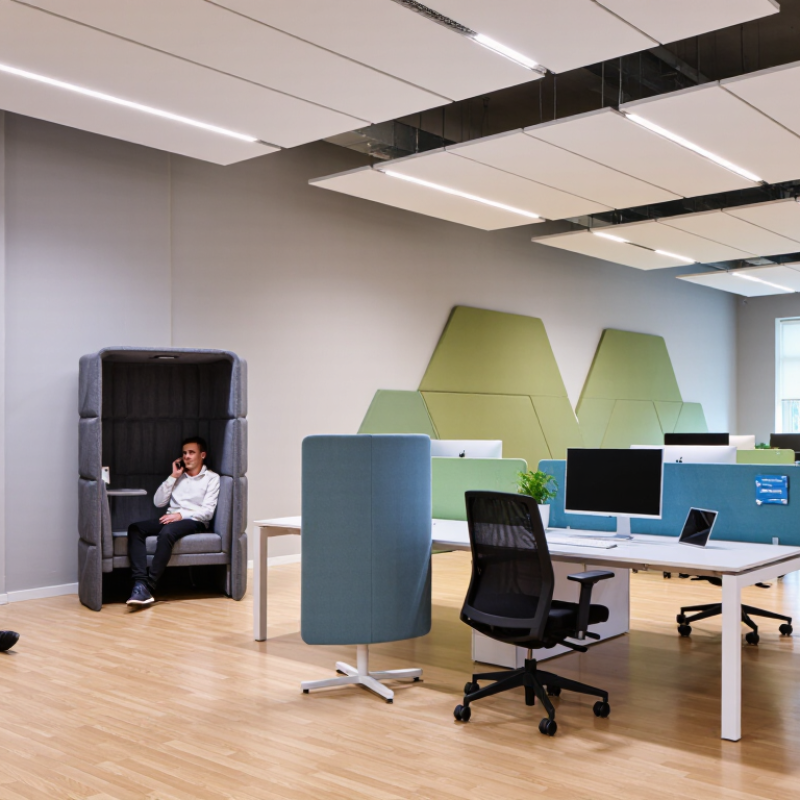
A high-backed sofa can create a quieter conversation zone in an open office. A suspended panel may soften voices beneath a hard ceiling. Upholstered screens can separate desks without building permanent walls. Placement matters. Furniture works best near reflective surfaces, busy walkways, or areas where people need focused conversation. The result depends on room size, ceiling height, materials, and user behavior.
Acoustic furniture cannot solve every noise problem. Noise still travels. A thin screen may absorb some speech but block very little low-frequency sound. This limitation is often overlooked during planning. In my experience, better results come from combining furniture with thoughtful layouts, softer floor finishes, and reasonable sound levels. Measurements from an acoustic professional can confirm whether the change is effective. Human feedback also matters; a room may test quieter but still feel uncomfortable. Small details, such as a gap beneath a booth or a hard tabletop, can weaken the intended effect. Its real value lies in making shared spaces more usable without sacrificing flexibility or visual openness.
How Acoustic Furniture Controls Sound
Acoustic furniture is designed to make shared spaces quieter and more comfortable. It controls sound through absorption, separation, and careful placement. Upholstered screens, high-backed seating, and felt-covered panels can capture part of the sound energy that would otherwise bounce across hard surfaces. Softer materials reduce reflections from walls, floors, and desks. The room feels calmer.
The shape of the furniture also matters. A high-backed booth can block direct speech between nearby workers. A desk screen can reduce short-range distractions without creating a closed room. In meeting areas, curved seating may help contain voices within a smaller zone. Sound control is not magic. It depends on distance, ceiling height, furniture density, and the room’s existing materials.
During room assessments, I look for repeated reflections, especially near glass walls and bare floors. Adding one acoustic chair may help its user, but it will not solve excessive noise across an entire office. More furniture is not always better. Poor placement can create crowded walkways while leaving sound problems untouched. Measurements can improve decisions, although real occupants may behave differently than a test predicts. Acoustic furniture works best as part of a balanced plan, with reasonable speech levels and suitable wall or ceiling treatment. It may not perform perfectly, and that limitation deserves honest attention.
Main Types of Acoustic Furniture
Acoustic furniture combines seating, privacy, and sound control in one workplace element. Its design usually relies on porous materials that absorb sound energy. Dense surfaces can also block or redirect nearby noise. However, no single piece can make a room silent.
The main types include acoustic booths, privacy pods, and high-backed seating. Booths create enclosed spaces for calls, interviews, or focused tasks. Pods usually offer softer boundaries and easier access, but they provide less isolation. Acoustic sofas use tall side and rear panels to reduce conversations reaching nearby desks. They work well in open offices, especially around informal meeting areas.
Movable acoustic screens are another practical option. They divide desks, soften reflections, and can be repositioned as teams change. Ceiling baffles and wall panels are also common furniture-like solutions. They absorb speech reverberation above workstations and make conversations clearer. Some meeting tables include integrated acoustic dividers, which help separate small groups without building permanent walls.
Placement matters greatly. A screen beside a noisy walkway may help more than a thicker panel placed randomly. Furniture should support the room’s full acoustic plan, including ceiling height, hard floors, and ventilation noise. Small gaps can reduce performance.
It is not magic.
A useful assessment measures reverberation, speech privacy, and user comfort after installation. Employees may still dislike enclosed pods if lighting feels poor or ventilation seems weak. Acoustic furniture needs testing, adjustment, and honest feedback.
Materials and Design Features
What Is Acoustic Furniture and How Does It Work?
Materials and Design Features
Acoustic furniture combines seating, partitions, and storage with sound-absorbing surfaces. It helps reduce reflected noise in offices, libraries, lounges, and shared rooms. The furniture does not make a space silent. It controls how sound travels.
Porous materials are central to its performance. Recycled fiber, mineral wool, PET felt, and open-cell foam can absorb sound energy. Their tiny air spaces slow vibrating air and reduce echoes. Upholstered panels also help, especially when they are thick and placed near conversation areas. A dense outer fabric protects the core, but overly tight coverings may limit absorption. This detail is easy to overlook.
Design affects results as much as material choice. High-backed seating creates a partial acoustic boundary around users. Freestanding screens separate speech zones without building permanent walls. Curved surfaces can scatter sound, while perforated panels may absorb selected frequencies behind them. Air gaps behind panels often improve low-frequency performance. Small gaps matter.
In practical assessments, placement usually determines whether acoustic furniture works well. A screen beside a noisy walkway may block distractions more effectively than one placed in a quiet corner. Sofas should face away from loud equipment when possible. Measurements can support decisions, but human listening remains important. People notice sharp voices, chair movement, and repeated interruptions differently. Acoustic furniture can also feel bulky, expensive, or visually heavy. Good design balances comfort, maintenance, airflow, and sound control.
Applications and Selection Considerations
Acoustic furniture combines seating, partitions, screens, and ceiling elements with sound-absorbing materials. It reduces reflected noise rather than blocking every sound. Fabric, foam, perforated panels, and mineral cores convert some acoustic energy into small amounts of heat. The result is less reverberation around desks, meeting areas, and reading zones. It is not magic. The World Health Organization’s Environmental Noise Guidelines recommend indoor classroom noise below 35 dB(A), highlighting why speech clarity matters in shared spaces.
Applications vary by room behavior. Open offices benefit from high-backed booths and movable screens near collaboration areas. Libraries need quiet seating with limited visual distraction. Schools and clinics often need durable, cleanable surfaces with rounded edges. Selection should begin with room volume, ceiling height, occupancy, and the main noise source. Then compare certified absorption data. ISO 354 measures sound absorption in a reverberation room, while ASTM C423 reports the Noise Reduction Coefficient, commonly shown from 0 to 1. Higher values generally indicate stronger absorption, but placement still matters. A panel hidden behind furniture may perform poorly. Measure before buying. Check fire ratings, fabric maintenance, mobility, and replacement access. Acoustic comfort is also subjective; a very quiet corner can feel isolating. That detail is easy to overlook.